
Workforce planning aligns an organization's headcount with its strategic goals by forecasting talent needs and modeling compensation costs. Without integrating salary budgets and total rewards, even the most detailed headcount forecasts can become financially unfeasible.
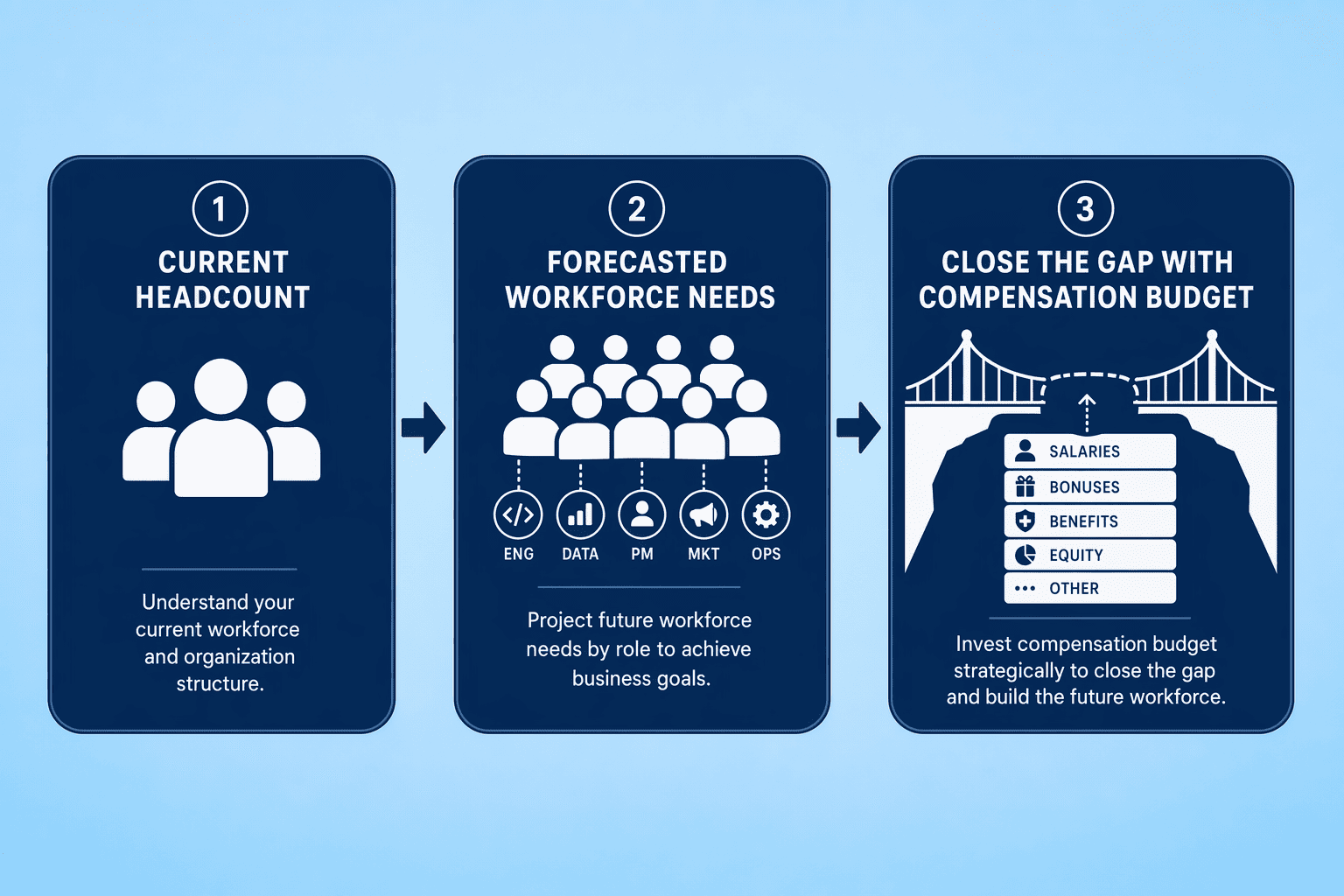
Workforce planning is the process of analyzing, forecasting, and aligning an organization's headcount with its strategic goals by balancing labor supply against demand across roles, skills, and time horizons. It answers three questions: *What workforce do we have now?*, *What workforce will we need?*, and *How do we close the gap?* — but the foundation of every answer is a compensation budget that defines how many hires, at what salary, the business can afford.
Workforce planning operates across four horizons, each requiring a distinct budget view:
Each horizon demands a different budget granularity: operational planning pulls from a fixed allocation; strategic planning models compensation spend under multiple revenue trajectories. Platforms like CompUp support this budget-first approach by enabling real-time headcount spend tracking and scenario modeling, but the workflow itself is universal, not tool-dependent.
Most workforce planning frameworks (IBM, SHRM, CIPD) treat compensation as an *output*, a cost to calculate after headcount needs are defined. But in practice, budget constraints define *whether* those needs can be met. If strategic planning calls for ten engineers but the salary forecast exceeds available budget, the gap-closing solution isn't to hire ten engineers, it's to reprioritize roles, adjust target market positioning, or defer hiring until revenue grows.
What this means: effective workforce planning inverts the traditional sequence. It starts by asking *What can we afford to pay?* before asking *How many people do we need?* Compensation benchmarking, salary-band design, and budget simulation become the first planning step, not the last. Without this budget anchor, workforce plans become wishful headcount projections disconnected from financial reality.
Understanding the definition and scope of workforce planning sets the foundation, but headcount projections alone cannot greenlight hiring decisions. The next section explores how compensation planning transforms FTE counts into realistic budget allocations.
Workforce planning answers "how many people do we need?", but compensation planning determines whether that plan is affordable, equitable, and sustainable. Organizations using workforce analytics compensation forecasting reduce budget variance by about 20-25% compared to traditional planning methods, and compensation typically accounts for 50-70% of operating costs. Without integrated compensation modeling, workforce plans become aspirational headcount targets disconnected from fiscal reality.
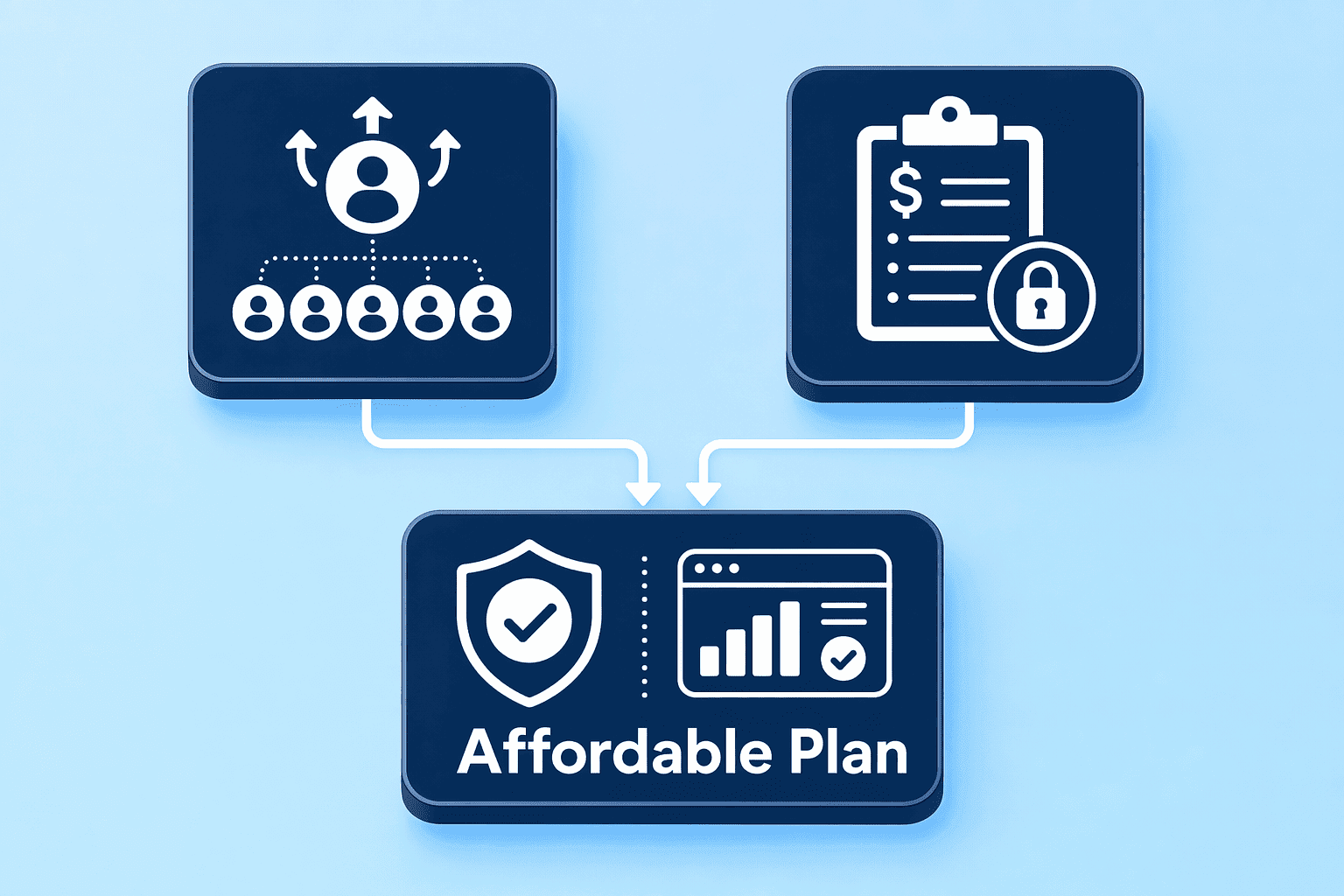
Headcount budgets constrain hiring plans by translating FTE counts into spend. A workforce plan that calls for 12 new engineering hires becomes actionable only when salary forecasts model the full cost: base pay, bonuses, benefits, equity, and payroll taxes. Headcount planning is largely finance-driven and cost-oriented, asking "How many full-time employees can we afford?" Salary forecasts extend this logic across 12-36 month horizons, enabling apples-to-apples scenario comparison, aggressive growth versus steady state versus contraction. When compensation planning is separated from workforce planning, headcount targets routinely overshoot budget capacity by 15-30%, forcing mid-cycle hiring freezes or retroactive salary compression.
Workforce plans that track only base salary miss 30-50% of total compensation spend. Total rewards modeling incorporates base, bonuses, equity grants, health benefits, retirement contributions, and payroll taxes to surface the real cost of a hire. Employees who feel cared for through transparent total rewards communication are 1.3x more engaged and loyal, yet 50% of employees would feel more cared for if their organization improved benefits communications. Total comp modeling platforms like CompUp, Pequity, and Heyquity automate the calculation of base + bonus + equity + benefits for scenario planning, though spreadsheets remain the dominant tool for many mid-market teams. What this means: a workforce plan that hires 10 senior engineers may look budget-neutral on base salary but push total comp spend 40% over budget once equity refresh grants and benefits load are included.
Many organizations run workforce planning and pay equity reviews as separate workflows, but hiring new roles at inconsistent comp levels creates compounding equity gaps that require retroactive correction. When a workforce plan adds 15 mid-level product managers without referencing existing salary bands, new hires may land 10-20% above or below peers with identical scope and tenure. Workforce planning must account for pay equity from the start by modeling new hires against internal bands and external benchmarks simultaneously. This prevents the anti-pattern where Q1 hiring creates pay compression that Q3 merit cycles cannot fully remedy without material budget increases.
With the compensation-planning connection established, it's time to operationalize the workflow. The five-step process below walks through analyzing your current state, forecasting demand, modeling scenarios, closing gaps, and tracking execution.
Workforce planning is not a one-time headcount exercise, it is a continuous cycle that aligns talent needs with business goals and compensation strategy. The five steps below break down the compensation-focused planning process, from baseline auditing through real-time execution tracking.
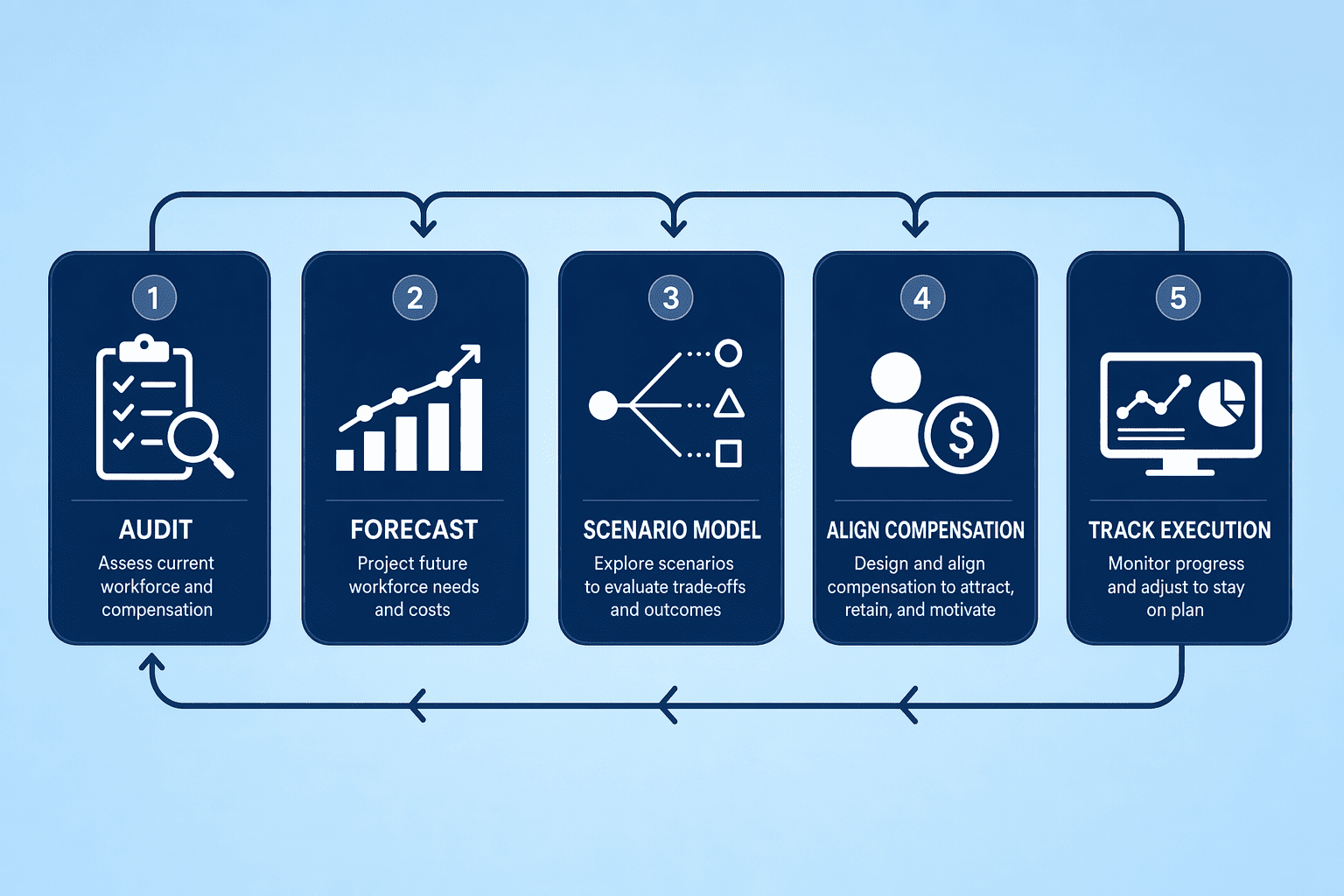
Start by auditing your existing headcount, roles, and total compensation spend. Identify how many employees you have in each department, what their current salaries and benefits packages look like, and how much budget you are currently allocating to compensation. This baseline becomes your planning anchor, you cannot forecast future needs without understanding present reality. Document current pay structures, salary bands, and any pay-equity issues that need remediation before scaling headcount.
Align your strategic goals, revenue targets, product launches, market expansion, with the roles and skill sets required to execute. If your business plans to enter three new markets next year, translate that into the specific headcount additions needed: sales representatives, compliance specialists, localization experts. Forecast not just the number of hires, but also the compensation levels required to attract competitive talent in each geography and function. This step converts strategy into concrete workforce demand.
Build multiple budget scenarios to quantify the total compensation impact of different hiring strategies. Use a decision framework that compares aggressive hiring (accelerated headcount growth, premium pay offers, higher risk of budget overrun), conservative hiring (slower growth, market-median pay, lower risk but potential talent gaps), and reallocation (shifting existing budget from low-priority roles to high-impact hires, minimal new spend). For each scenario, model total comp spend, hiring velocity, and business risk. Platforms like CompUp enable teams to run these simulations in real time, adjusting assumptions and seeing immediate budget impacts without rebuilding spreadsheets.
Compare your current state (Step 1 baseline) to your forecasted needs (Step 2 demand). Identify gaps: roles that need to be filled, skill sets that are missing, and compensation bands that may be uncompetitive. Prioritize actions by business impact and budget availability, hire mission-critical roles first, defer lower-priority positions if budget is constrained. Sequence your hiring plan across quarters, ensuring you do not exhaust annual budget in Q1. This step turns scenario modeling into an executable roadmap.
Execute your plan and monitor actual spend against budget in real time. Real-time budget tracking platforms like CompUp enable finance and HR teams to monitor actual headcount spend against plan on a weekly or monthly cadence, flagging overruns before they compound. Spreadsheet-based workflows require manual reconciliation, which lags by 30 to 60 days in many organizations. As business conditions shift, revenue accelerates, a competitor acquires talent, or a product launch is delayed, adjust your hiring pace or comp offers accordingly. Workforce planning is iterative, not static.
Suggested Read: Learn how to build competitive salary structures by exploring how to determine and build a compensation range.
Even a well-designed process hits friction when systems are disconnected, budgets are rigid, or business priorities shift overnight. This section examines the most common roadblocks and practical mitigation strategies.
Even well-intentioned workforce plans founder when disconnected systems, fixed budgets, and shifting business conditions collide. Understanding these practical obstacles, and the compensation-specific strategies that mitigate them, turns planning from a static exercise into a resilient capability.
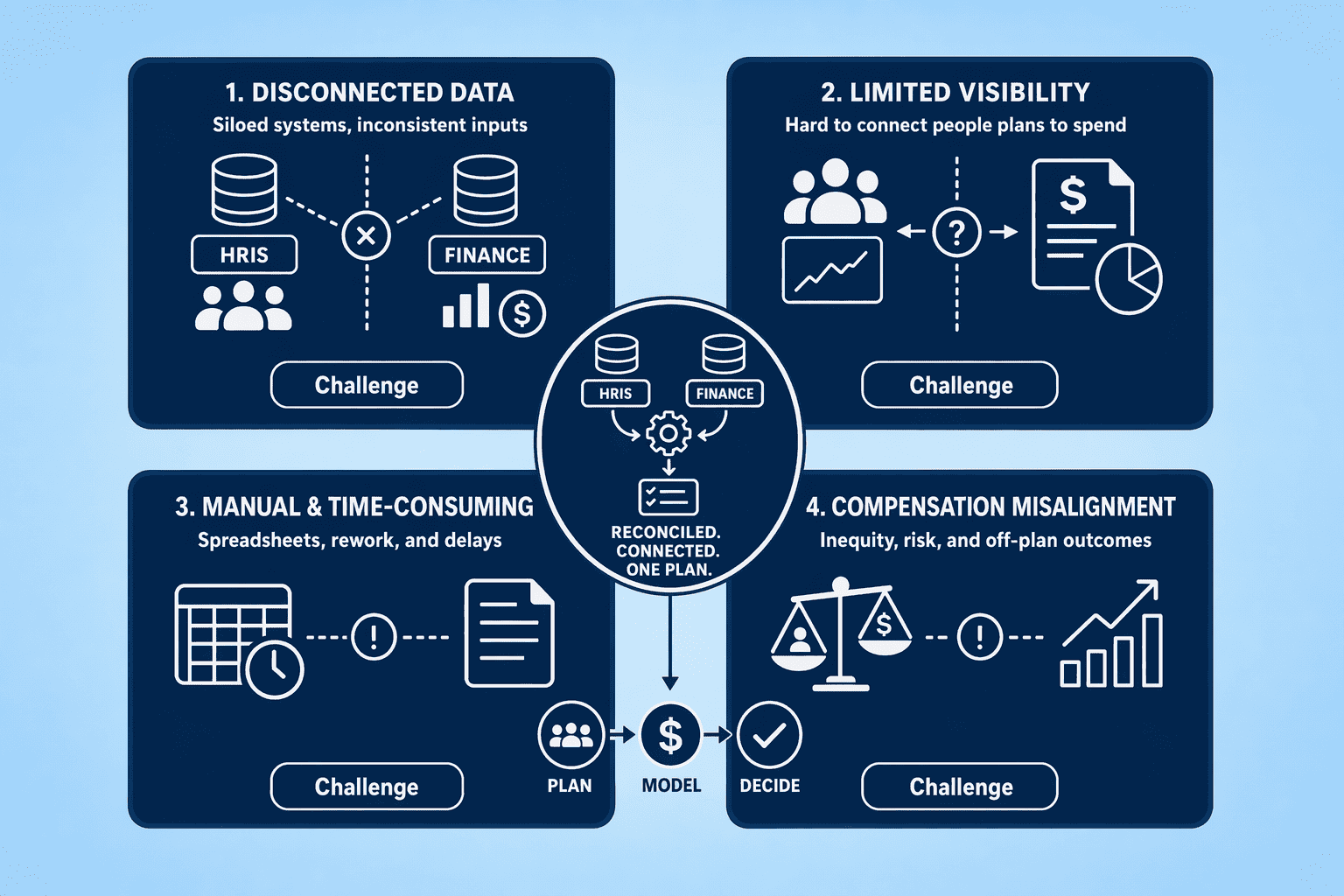
When HRIS headcount records and finance compensation budgets live in separate spreadsheets, teams waste hours reconciling conflicting reports and can't confidently approve new hires. A 2024 research review found that roughly 94% of business spreadsheets contain faults, many introduced during development rather than caught afterward. The common mistake is treating HR headcount data and finance compensation budgets as separate sources of truth; without synchronization, version-control issues delay decision-making and erode trust in the numbers.
Compensation budgets are finite, and workforce planning must operate within those constraints. A prioritization framework helps: rank open roles by business impact (revenue-generating versus support), time-to-fill urgency, and compensation cost. This allows teams to sequence hiring within budget limits rather than treating all roles as equally urgent.
Static annual plans fail when business conditions shift mid-year. Scenario modeling tools, whether spreadsheet templates, dedicated platforms like CompUp, or FP&A suites, enable teams to maintain multiple workforce plan versions and switch between them as conditions shift. Rolling forecasts and quarterly refresh cycles provide resilience when market dynamics or organizational strategy evolves.
Note: The workflow above synthesizes observed best practices from HR and FP&A disciplines; authoritative research on compensation-driven workforce planning remains sparse as of 2026.
Addressing these challenges often requires the right technology stack. From spreadsheets to specialized compensation platforms and enterprise FP&A suites, the choice depends on team size, integration needs, and budget complexity.
Excel and Google Sheets remain the default starting point for mid-market teams, familiar, flexible, and free. Teams can model headcount forecasts, salary scenarios, and departmental budgets without software procurement cycles. The trade-offs: version control chaos, manual error risk, and no audit trail when multiple stakeholders edit the same file.
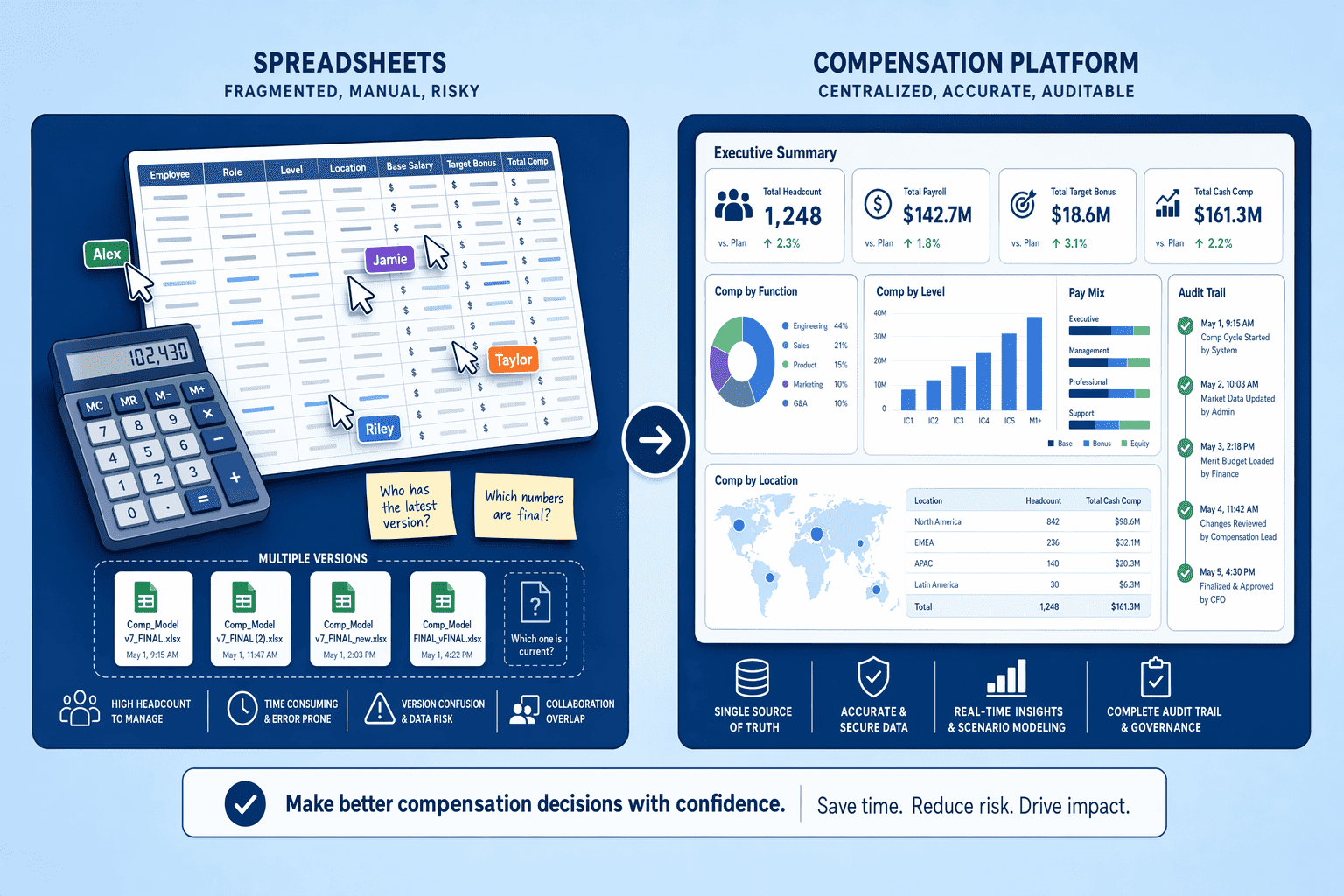
Dedicated compensation platforms, CompUp and Pequity automate salary planning, ensure pay equity, and simplify bonus allocation.
CompUp supports workforce planning with compensation benchmarking and budget simulation.
Strengths: real-time budget tracking, transparent comp bands, and integration with HRIS systems.
Trade-offs: narrower scope than full workforce planning suites, no succession planning or skills gap analysis built in.
Best for mid-market teams prioritizing compensation transparency and pay equity compliance.
Pequity combines spreadsheet familiarity with automation at scale; Heyquity focuses on pay equity audits and EU Pay Transparency Directive compliance. Teams should evaluate based on org size, budget, and integration needs, many platforms offer free trials for initial evaluation.
Enterprise teams with complex org structures and integrated financial planning typically deploy broader workforce planning tools, Workday Adaptive Planning, Anaplan, and Visier, or HRIS modules that extend payroll systems into headcount forecasting, succession planning, and skills gap analysis. Best for large organizations aligning workforce strategy with financial plans across multiple business units and geographies.
Dedicated compensation platforms like CompUp prioritize pay equity and budget transparency but lack the succession planning and skills gap analysis features of full workforce planning suites. Spreadsheets offer maximum flexibility and zero licensing cost but require manual version control and reconciliation, which delays decision-making during fast-paced hiring cycles. As workforce planning converges with financial planning (FP&A), compensation data will become the shared language between HR and finance, expect tighter integration between HRIS, compensation platforms, and enterprise planning systems by 2027. Start by documenting your current headcount baseline and total comp spend, then explore CompUp's scenario modeling tools to quantify the budget impact of alternative hiring plans.
Workforce planning is the strategic process of analyzing, forecasting, and aligning an organization's headcount with business goals by balancing labor supply against demand across roles, skills, and time horizons. It answers what workforce you have now, what you need in the future, and how to close the gap, grounded in compensation budgets and salary forecasts to ensure affordability and equity.
The five compensation-focused steps are: (1) analyze your current workforce and total compensation spend, (2) forecast business needs aligned with strategic goals, (3) model compensation scenarios for new hires and existing team adjustments, (4) identify role and skill gaps, and (5) implement the plan with real-time tracking to adjust as conditions change.
Headcount budgets and salary forecasts constrain and shape talent strategies by revealing the true cost of workforce plans. Total rewards modeling incorporates base, bonuses, equity grants, benefits, and payroll taxes, capturing 30-50% of spend that base-salary-only plans miss, ensuring plans are financially sustainable and equitable.
Organizations typically choose from three categories: spreadsheets (flexible, free, but manual), dedicated compensation platforms like CompUp, Pequity, and Heyquity (best for pay transparency and budget modeling ), and enterprise workforce planning or FP&A suites like Workday Adaptive Planning, Anaplan, and Visier (best for complex org structures and integrated financial planning).
The top challenges are data silos between HR and finance systems that force manual reconciliation, budget constraints requiring rigorous prioritization, and plan obsolescence when business needs shift mid-year. Mitigation strategies include prioritization frameworks, scenario modeling to maintain multiple plan versions, and rolling quarterly forecasts instead of static annual plans.
No. Workforce planning software is not legally required. Organizations can execute workforce planning using spreadsheets or manual processes, tools automate and simplify the workflow but are not mandated by law. Software helps manage complexity, reduce errors, and improve transparency, but compliance depends on organizational processes, not specific technology choices.
Most organizations should conduct quarterly reviews, with monthly check-ins during high-growth or volatile periods. Rolling forecasts and scenario models enable faster plan adjustments than annual-only planning, helping teams respond to changing business conditions and avoid compounding pay equity gaps when hiring at inconsistent compensation levels.
Community Manager (Marketing)
As a Community Manager, I’m passionate about fostering collaboration and knowledge sharing among professionals in compensation management and total rewards. I develop engaging content that simplifies complex topics, empowering others to excel and aim to drive collective growth through insight and connection.
Revolutionizing Pay Strategies: Don't Miss Our Latest Blogs on Compensation Benchmarking