Your highest performer just delivered a project that saved the company $2 million, and you know their salary has fallen behind the market. But your department budget is fixed, and HR just sent an email reminding everyone that raises this cycle are capped at 3%. The tension between rewarding talent and respecting financial guardrails is not a one-off frustration.
It is the daily reality of every manager who is trying to keep a team intact while staying within the lines. You can build a data-backed proposal that finance will sign off on using market benchmarking, internal equity analysis, and compensation platforms built for budget-aware planning. This article unpacks the strategies that make that possible.
Before the deep dive, the snapshot for the busy reader who needs the map before the route.
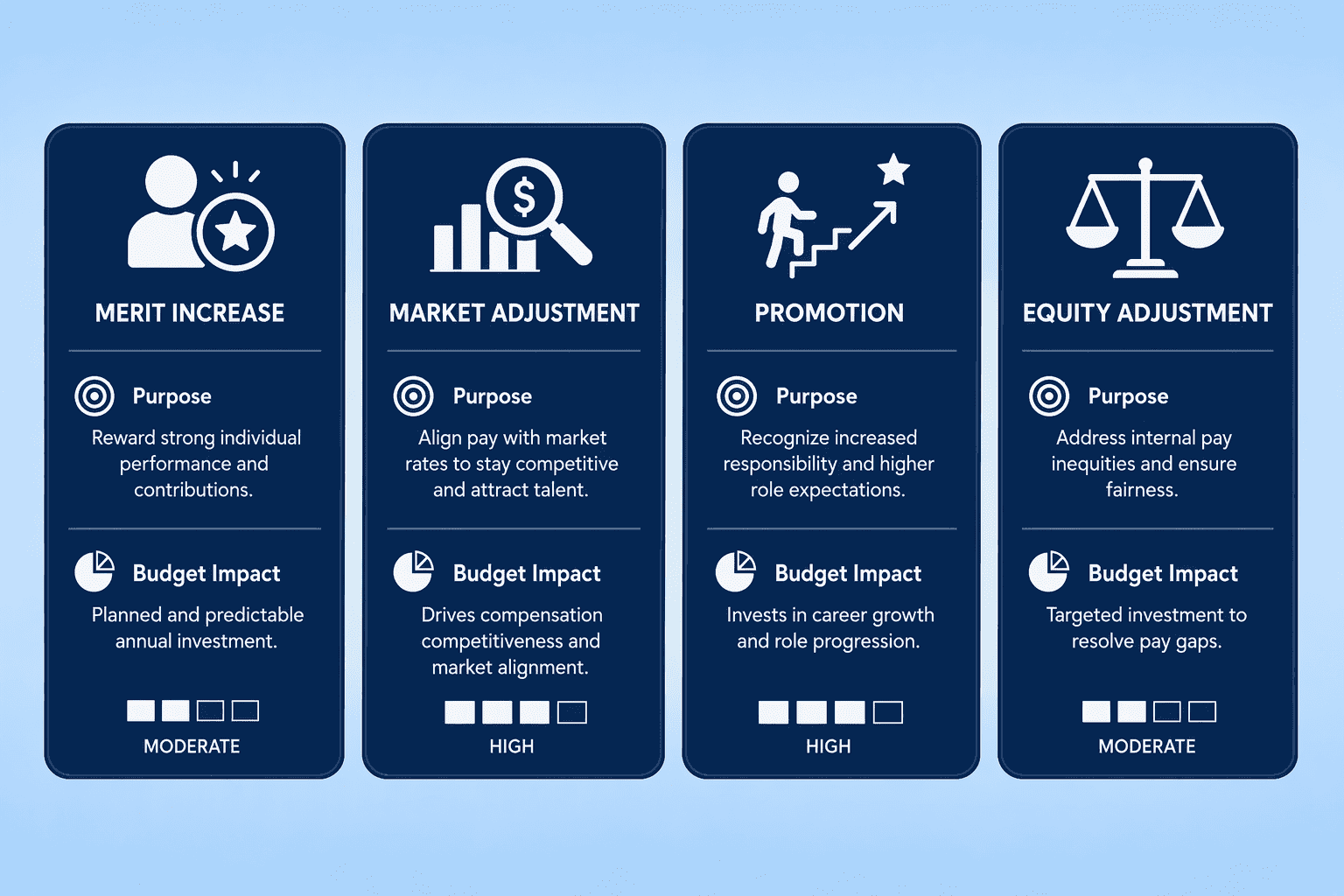
Before a manager can propose a salary change that respects a budget, they must speak the language of compensation with precision. A salary adjustment is any modification to an employee’s base pay. The type of adjustment dictates its justification, its cost, and its priority in a constrained cycle.
These categories are not interchangeable, and mixing them is where budgeted proposals collapse. A manager who frames a market catch-up as a merit increase will undershoot what the employee needs to stay. A retention counter-offer dressed as a cost-of-living tweak will break the equity structure for everyone else at the same level. The State of North Carolina’s pay administration policy, effective as of July 1, 2026, illustrates this separation: it aligns salary range midpoints to the market 50th percentile and uses a quartile-based model that reserves the midpoint zone for employees “who have several years of experience beyond the minimum qualifications and are competently functioning in their positions.” That classification makes it possible to say, “This adjustment is not about performance, it is about restoring market position, and it belongs to this bucket.” Base pay is the anchor; total compensation is the broader tool. When budget dollars are scarce, a proposal that bundles a modest base adjustment with a one-time recognition award, an equity refresh, or an accelerated development pathway can move the needle without breaking the departmental ledger. Defining the category first, not the dollar figure, is what separates a request that sails through approval from one that stalls in review.
Market competitiveness is the simple math of retention: pay below the going rate, and your people get poached. If regional employers for the same software engineers are paying 8% above your midpoint, your best people will start receiving LinkedIn messages. A thorough compensation review cycle, like the one the University of Wisconsin, Milwaukee (UWM) structures every five years, explicitly targets "employees who have not progressed within salary range as expected with regard to market" and "employees in titles/functions with retention issues." Waiting for the exit interview is too late.
Internal equity gaps are quieter but equally corrosive. Pay compression happens when new hires are brought in at salaries that crowd, or even surpass, long-tenured performers. A senior analyst with seven years of institutional knowledge wakes up to find a freshly minted hire earning $4,000 more because the market moved. That disparity is a ticking clock, and the data to spot it lives in quartile distributions.
North Carolina's quartile-based model, where the midpoint targets market competitiveness, points to a concrete rule: employees sitting below the midpoint with strong performance and tenure are carrying a structural deficit that the organization must address. Add inflation, compliance pressures (equal pay claims are rising), and the raw retention risk for top-quartile contributors, and the driving forces behind any adjustment proposal become fact patterns a skeptical budget office cannot easily dismiss.
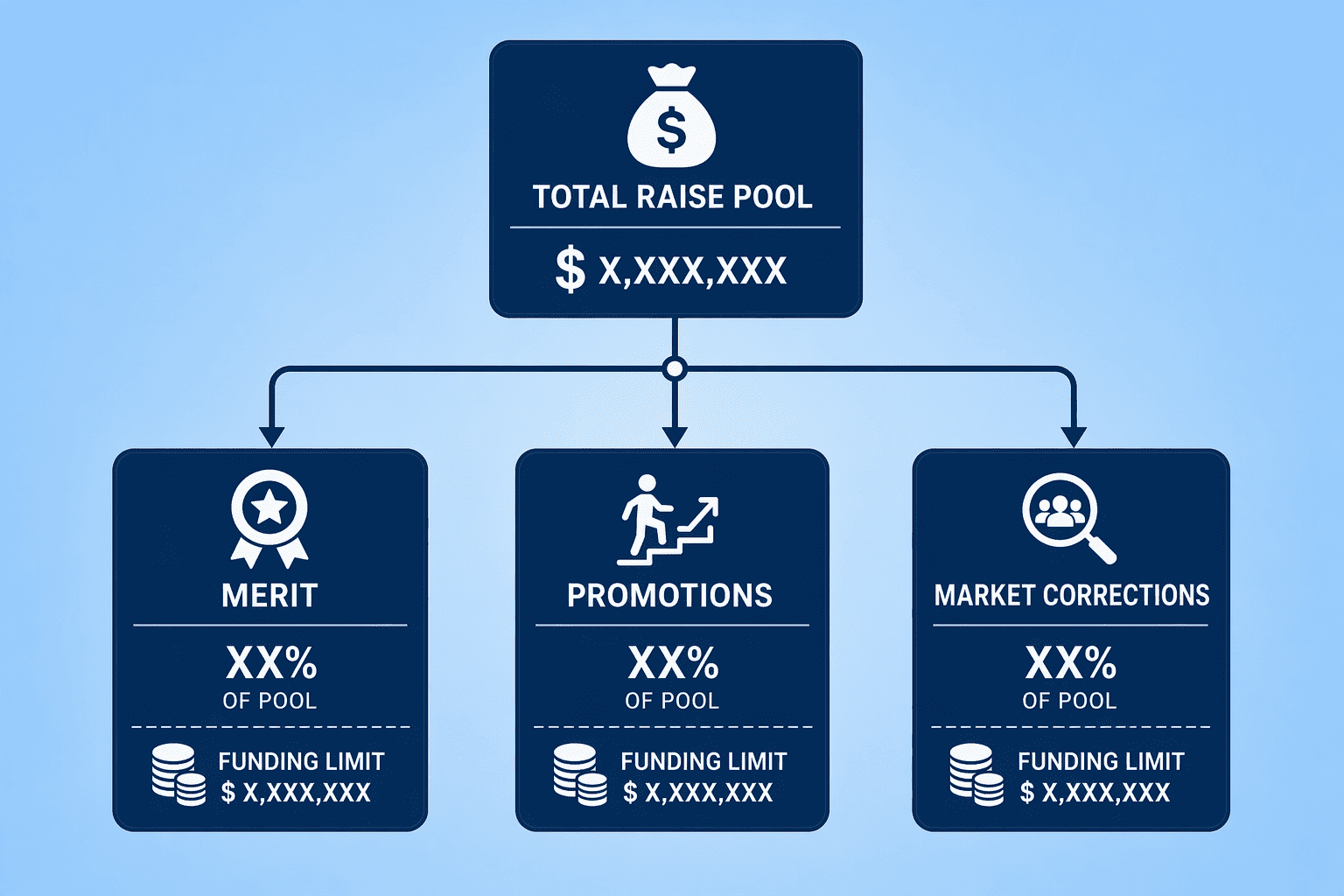
The proposal starts with a detailed budget review that examines your organization's compensation philosophy and the total raise pool available. You map every dollar: what percentage is earmarked for merit, what for promotions, and what headroom exists for market corrections. UWM's thorough compensation review policy states, "any pay adjustments will be contingent on funding availability," and that "institution, unit, and departmental budget constraints may limit units' ability to adequately address compensation issues." No proposal ignores that boundary.
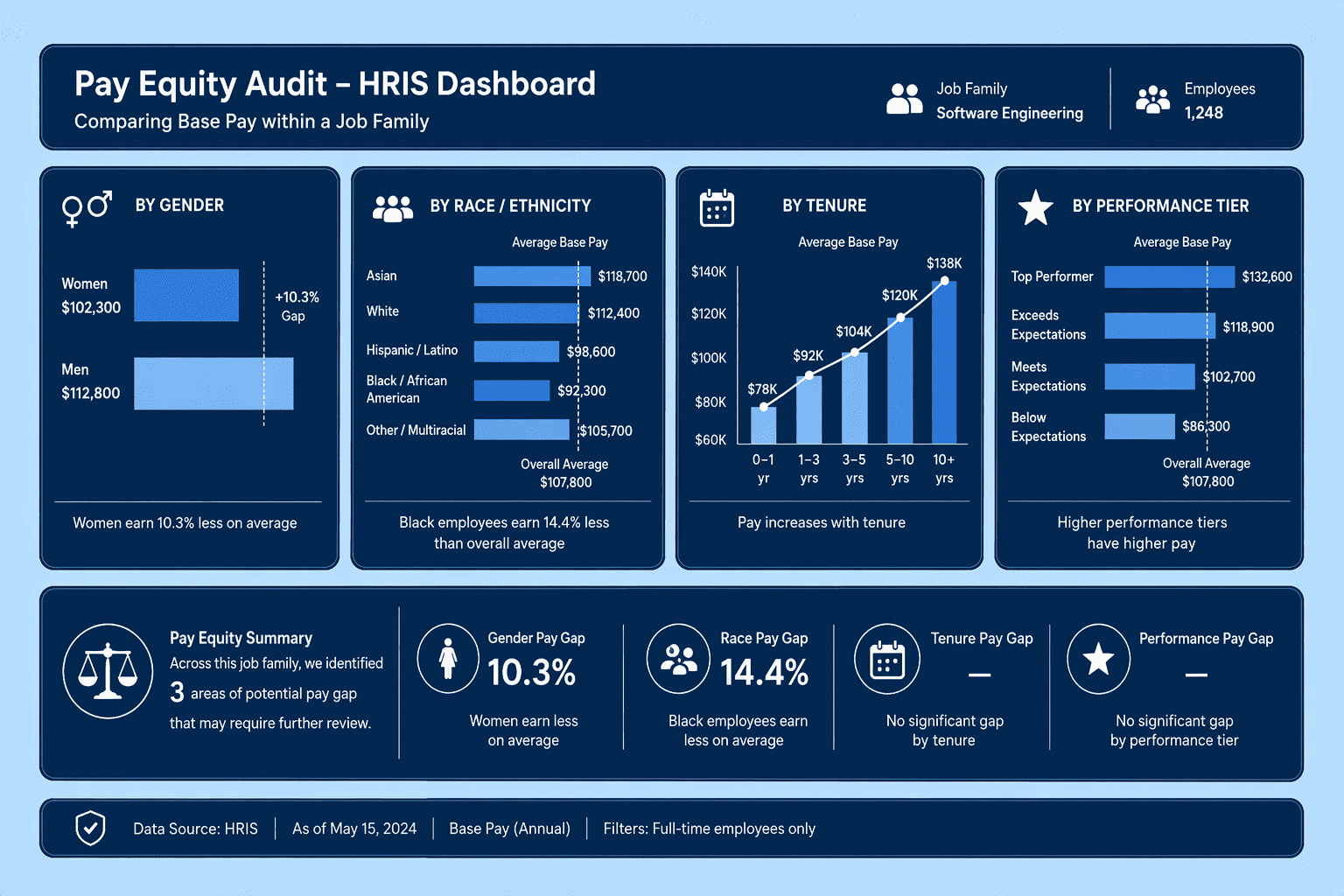
Pay equity means equal work demands equal pay, adjusted only for legitimate, non-discriminatory factors like performance, tenure, or location. When that rule breaks, you get pay compression and structural disparities that cluster among protected groups, and those disparities become legal findings. A pay equity audit, run regularly using your HRIS data, surfaces gaps before they calcify. Slice a job family by gender and race, then compare average base pay at the same tenure and performance tier. A gap of 3% or more is your signal to investigate.
Internal equity analysis takes the audit further and makes it operational for budget season. Using your salary grade ranges and quartile distributions, you identify where experienced, competent employees have fallen behind relative to the organization's own structure. North Carolina explicitly flags the midpoint as the zone for employees with "several years of experience beyond the minimum qualifications" who are "competently functioning in their positions." If a high-performing woman with five years of tenure is sitting at the first quartile while male peers with similar profiles are at the third, you have an equity-based justification for an adjustment that also meets the budget test, it restores internal alignment rather than chasing an external market spike.
Confidentiality is critical. UWM's policy states that "records related to compensation analyses should be treated as confidential and should not be released by Human Resources or any unit or employee." Run the analysis, apply the adjustments, and communicate the outcome, but never expose individual comparator data. The goal is a defensible distribution, not a public spreadsheet.
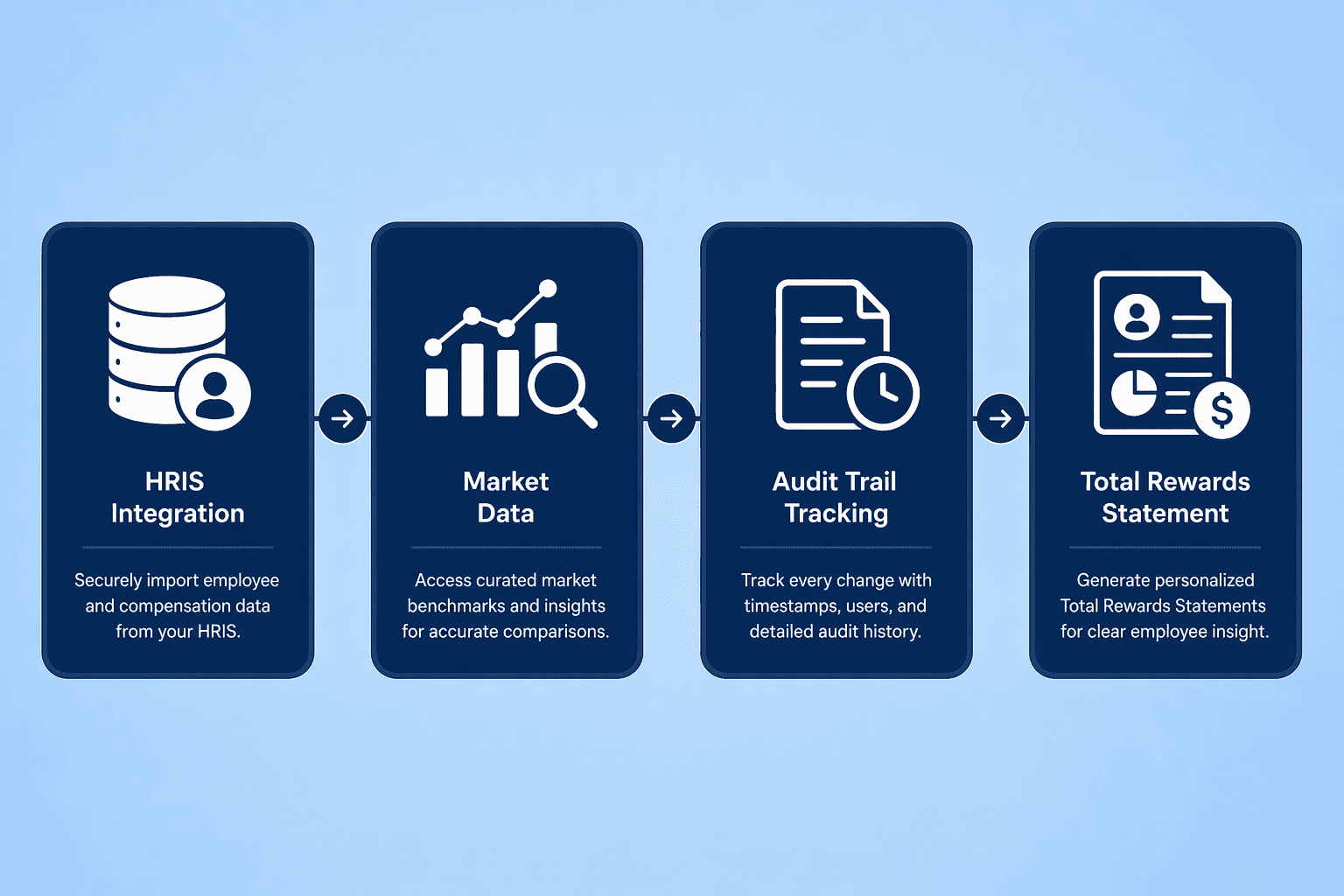
When every proposal has to survive a budget scrutiny that trusted spreadsheets cannot reliably withstand, a purpose-built compensation platform becomes your audit trail. CompUp is a compensation management platform that integrates with HRIS tools like BambooHR and Lattice, delivers real-time access to industry-specific market data, and automatically generates personalized Total Rewards Statements at the close of the appraisal cycle. For the manager under a cap, the core value is an automated budget check that prevents overruns and a centralized system that collapses benchmarking, equity checks, and approval workflows into a single source of truth.
| Capability | Manual/Spreadsheet Approach | CompUp |
|---|---|---|
| Market benchmarking | Static, manually updated survey data; multiple sources with data inconsistencies | Real-time access to industry-specific compensation data; updated continuously |
| Budget control | Formulas vulnerable to error; no real-time guardrail | Automated budget checks flag over-budget proposals before submission |
| Equity analysis | One-off pivot tables; labor-intensive audits | Centralized pay equity analytics embedded in the platform |
| Scenario modeling | What-if adjustments calculated manually; prone to version control issues | Built-in scenario modeling for budget and compensation adjustments |
| Total rewards communication | Separate mail merge; disconnected from payroll data | Auto-generated personalized Total Rewards Statements post-appraisal |
| Integration footprint | Manual data entry between systems | Integrates with BambooHR, Lattice, Darwinbox, and Workable |
These capabilities do not make budget constraints disappear, but they convert the proposal exercise from an argument about guesses to a conversation about calibrated numbers. At $3 per employee per year, CompUp is a compensation-specialized platform rather than an enterprise HCM suite, which positions it as a focused tool for the specific workflow of proposing, approving, and communicating pay adjustments inside a known spending limit.
Schedule a dedicated conversation and lead with the outcome. Most managers make the mistake of embedding a raise announcement inside a roundabout performance conversation, which leaves the employee confused about what just happened. Instead, open with the adjusted salary, state the effective date, and immediately frame the why: “Your base pay moves to $112,000 because the market for your role in our region has moved 6% and your performance over the past year put you at the top of the merit matrix.” Reference the data you used, market benchmark, quartile position, performance rating, without breaching the confidentiality of any comparator data. If the increase lands below what the employee hoped, explain the budget constraint honestly. A structured tool like CompUp helps here by generating the Total Rewards Statement that ties base pay, bonus, and benefits into one coherent picture, making the budget trade-off visible and defensible.
Conclude the meeting with next steps and documentation. Confirm the raise in writing within 24 hours and file the justification in the HRIS. When the adjustment is denied, provide clarity on what would change the outcome in the next cycle. People leave when the process is opaque; they stay when the logic is transparent, even if the number stings.
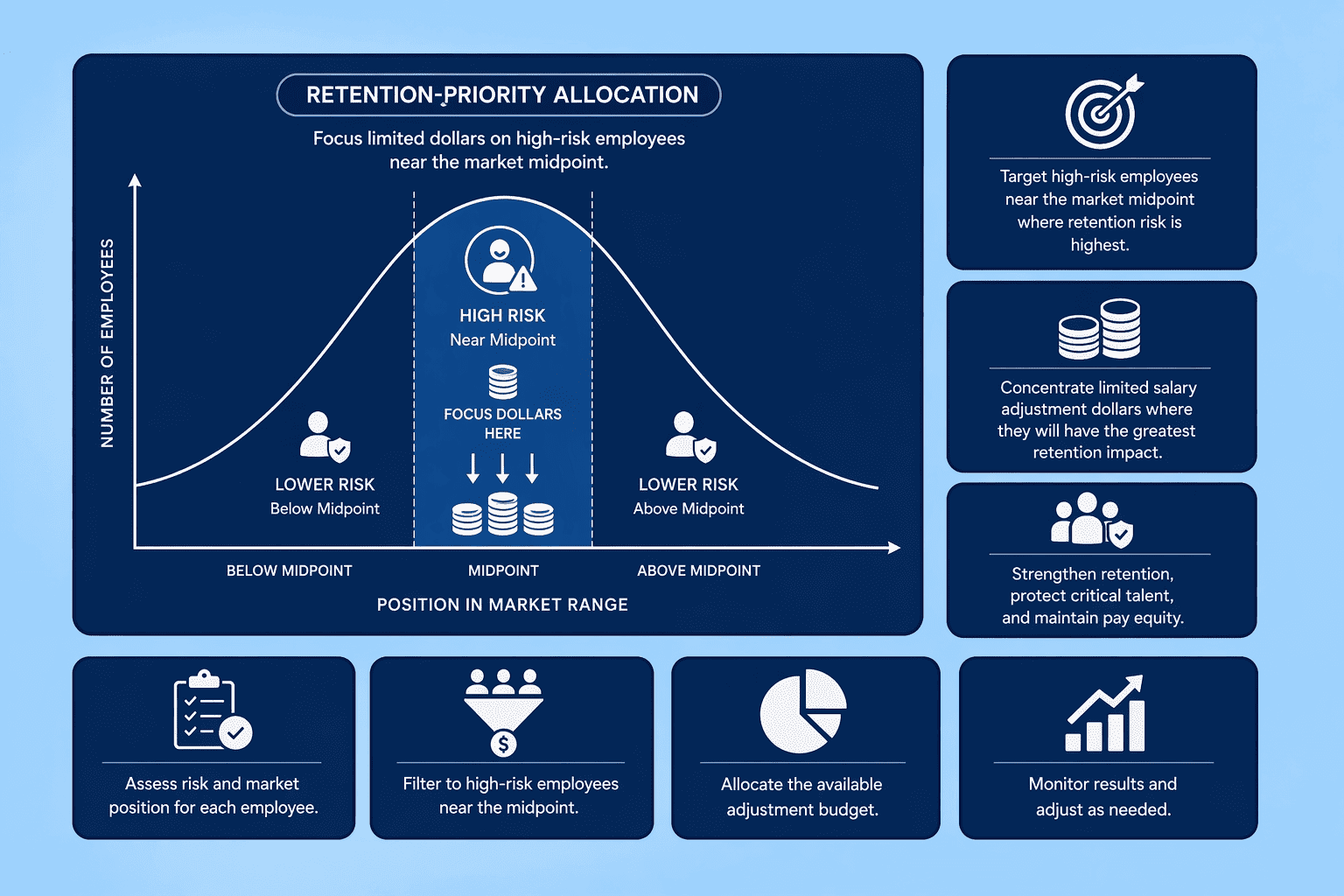
When every dollar counts and you still need to keep the engine running, the strategy shifts from “give everyone something” to “protect the core.” Your adjustment dollars work hardest when they target the employees you cannot afford to lose, often the experienced, competent performers sitting just below the market midpoint, exactly the population that North Carolina’s policy explicitly aims to align with that midpoint.
A data-backed salary adjustment inside a tight budget is not a contradiction. It starts with market benchmarks set at the 50th percentile, moves through a quartile equity check for internal fairness, and ends inside a compensation platform that enforces your spending cap. The manager who follows that sequence walks into the approval meeting with numbers, not narratives.
The outcome is not always a bigger check. It is a proposal that protects fairness for your team, rewards performance where the data supports it, and keeps your best people from looking elsewhere. That combination is the sustainable edge. If you're weighing options, CompUp is worth a closer look.
Managers can build a defensible case for a compensation adjustment by using a combination of data sources and tools:
Platforms like CompUp embed real-time market data and automate budget checks so managers cannot submit a proposal that exceeds the allocated pool. They also provide scenario modeling to project the impact of various raise options before submission.
Managers must analyze pay compression, tenure gaps, and disparities among protected groups using HRIS data. Regular internal audits, aligned with clear salary range structures, help identify and correct inequities before they become legal risks.
By referencing industry-specific, regionally adjusted market data to show the gap between an employee’s current pay and the competitive rate. The market 50th percentile is commonly used as a defensible target for competent performers.
Hold a dedicated meeting, state the adjusted salary and effective date immediately, and explain the data-driven rationale without revealing comparator compensation. Follow up with written documentation and clarity on future eligibility.
They target adjustments for high-impact retention risks, especially experienced, competent employees below the market midpoint, and supplement base pay with non-monetary rewards like career development and clear growth pathways.
Community Manager (Marketing)
As a Community Manager, I’m passionate about fostering collaboration and knowledge sharing among professionals in compensation management and total rewards. I develop engaging content that simplifies complex topics, empowering others to excel and aim to drive collective growth through insight and connection.
Revolutionizing Pay Strategies: Don't Miss Our Latest Blogs on Compensation Benchmarking