
Your compensation lead sends an email at 11:47 p.m. with a spreadsheet titled 'CompCycleFINALv9TuesdayFIXED.xlsx.' By morning, three managers have already asked for exceptions you cannot track.
A compensation review cycle is a time-bound operational event, typically a 4 to 6 week annual process, that adjusts pay across a group of workers. It should be a disciplined operational sprint, yet most companies run it as a fire-drill of scattered spreadsheets and last-minute approvals. A structured compensation review cycle is necessary to ensure fair, competitive, and consistent pay decisions across the organization.
This is a tactical execution step within workforce planning, but it is not the same thing as ongoing strategic workforce planning. Strategic workforce planning is a continuous, multi-year process that determines headcount needs, skill gaps, and organizational design. The compensation review cycle is the discrete event where you execute on the pay decisions that support that plan. Getting it right directly impacts retention, engagement, and budget alignment. Getting it wrong creates inequities that linger long after the cycle closes.
A disciplined compensation review cycle prevents budget drift, pay inequity, and retention risk before a single dollar reaches an employee's paycheck. Here are the critical operational insights from the process outlined below.
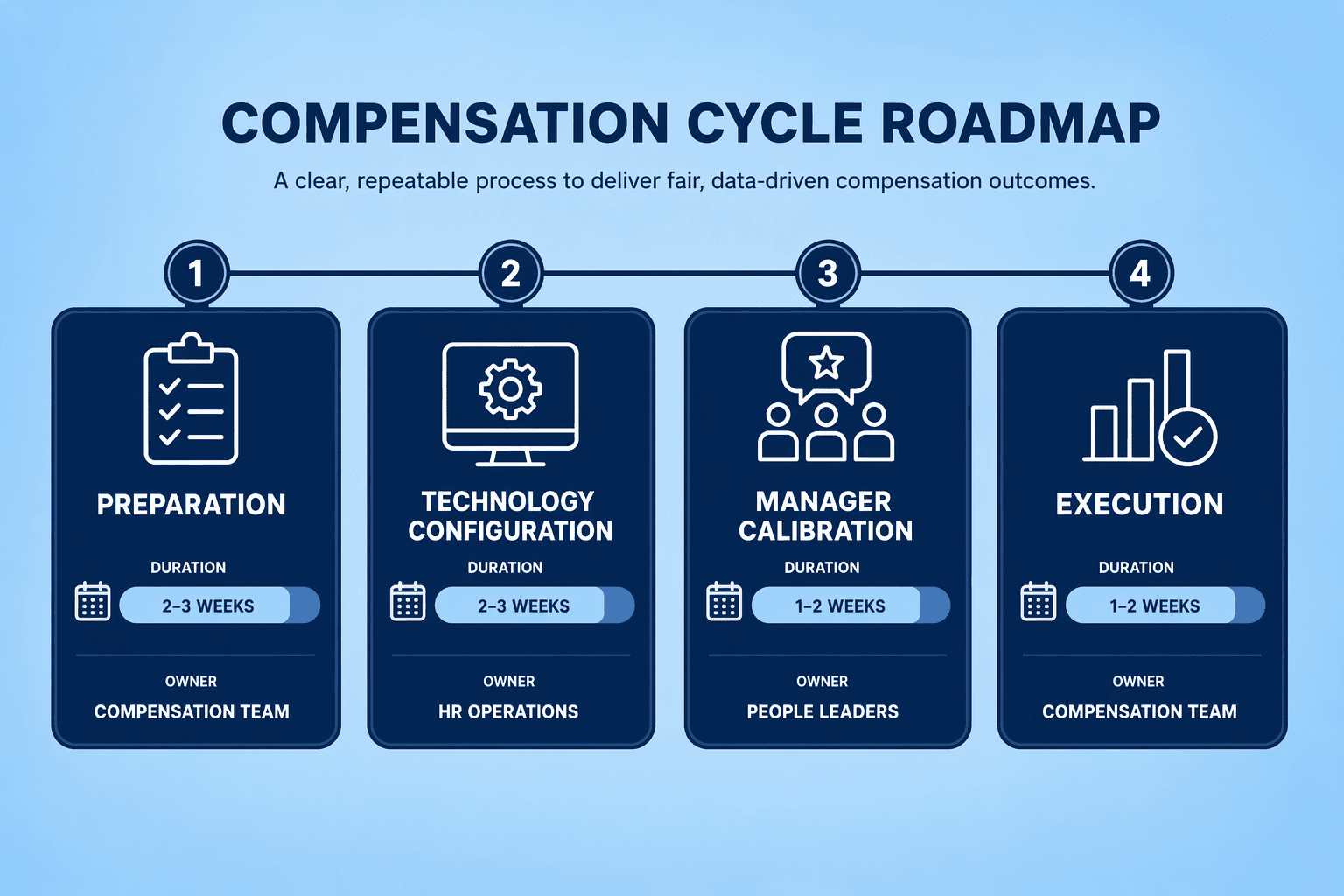
Here is how the options compare across the dimensions that matter most.
| Phase | Duration | Key Activities | Primary Owner | Common Pitfall |
|---|---|---|---|---|
| Preparation | 2 to 3 weeks | Philosophy update, market data refresh, budget modeling, pay equity audit | Comp lead, Finance, HR | Skipping equity audit until after budgets are set |
| Technology configuration | 1 week | Load headcount data, set merit matrices, configure approval chains | Comp lead, HRIS team | Using spreadsheets instead of a planning platform |
| Manager calibration | 1 to 2 weeks | Norming sessions, distribution reviews, exception requests | Managers, HRBPs | Allowing local optimization without central oversight |
| Approval & compliance | 1 week | Executive review, budget-to-actual reconciliation, compliance checks | Comp lead, CFO | Approving manually without budget guardrails |
| Employee communication | 1 week | Individual statements, FAQ, manager talking points, total rewards summaries | HR, Managers | Announcing without context on philosophy or timing |
| Post-cycle audit | 1 week | Disparity analysis, budget variance report, feedback survey | Comp lead, People Analytics | Closing the books without documenting lessons learned |
A merit cycle is a structured process, usually run annually or biannually, that rewards employees for their past year's performance. That process breaks the moment it detaches from a clear 'why.' Starting the cycle without a current-year philosophy statement is how you end up with budget spread evenly like peanut butter, rewarding no one meaningfully.
Revisit your compensation philosophy explicitly: are you leading the market on base pay, lagging with equity upside, or paying strictly for performance? Then align it with this year's business objectives. If your goal is a product inflection point that requires retaining a specific engineering cohort, the philosophy must hard-code that retention objective into every merit matrix and budget envelope before modeling begins.
At commercetools, the merit cycle broadly includes merit, market adjustments, and addressing internal gaps, while promotions sit on a separate budget and happen year-round. That clarity of scope is only possible when the philosophy is written down, shared, and enforced. Without it, managers optimize locally, and your aggregate spend drifts from the company's actual reward principles within one quarter.
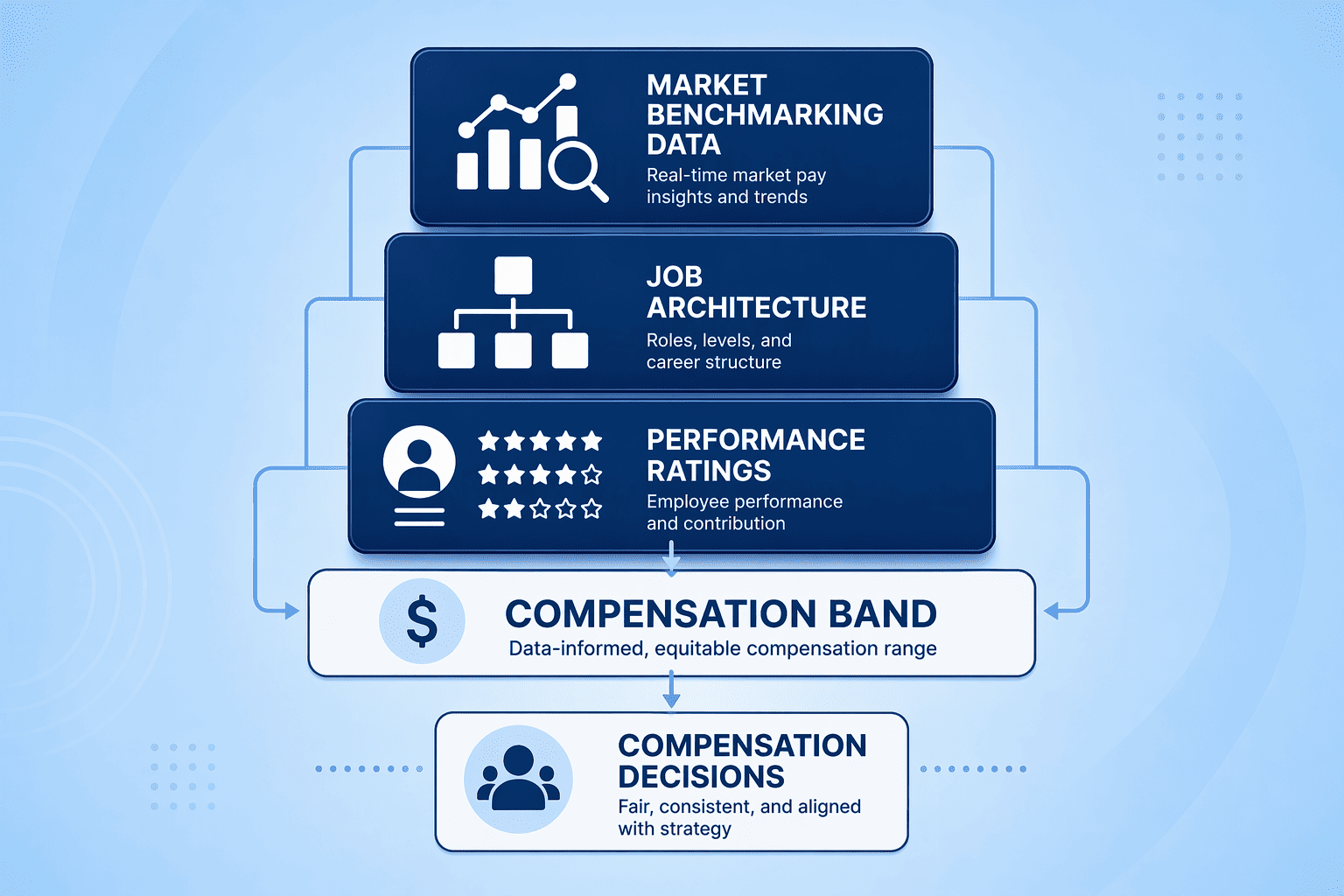
The compensation review cycle runs on three core data inputs:
If any of these is stale or missing, every downstream number becomes a guess. Compensation management software centralizes pay data to help organizations plan, manage, and analyze employee rewards, but the software is only as reliable as the data fed into it.
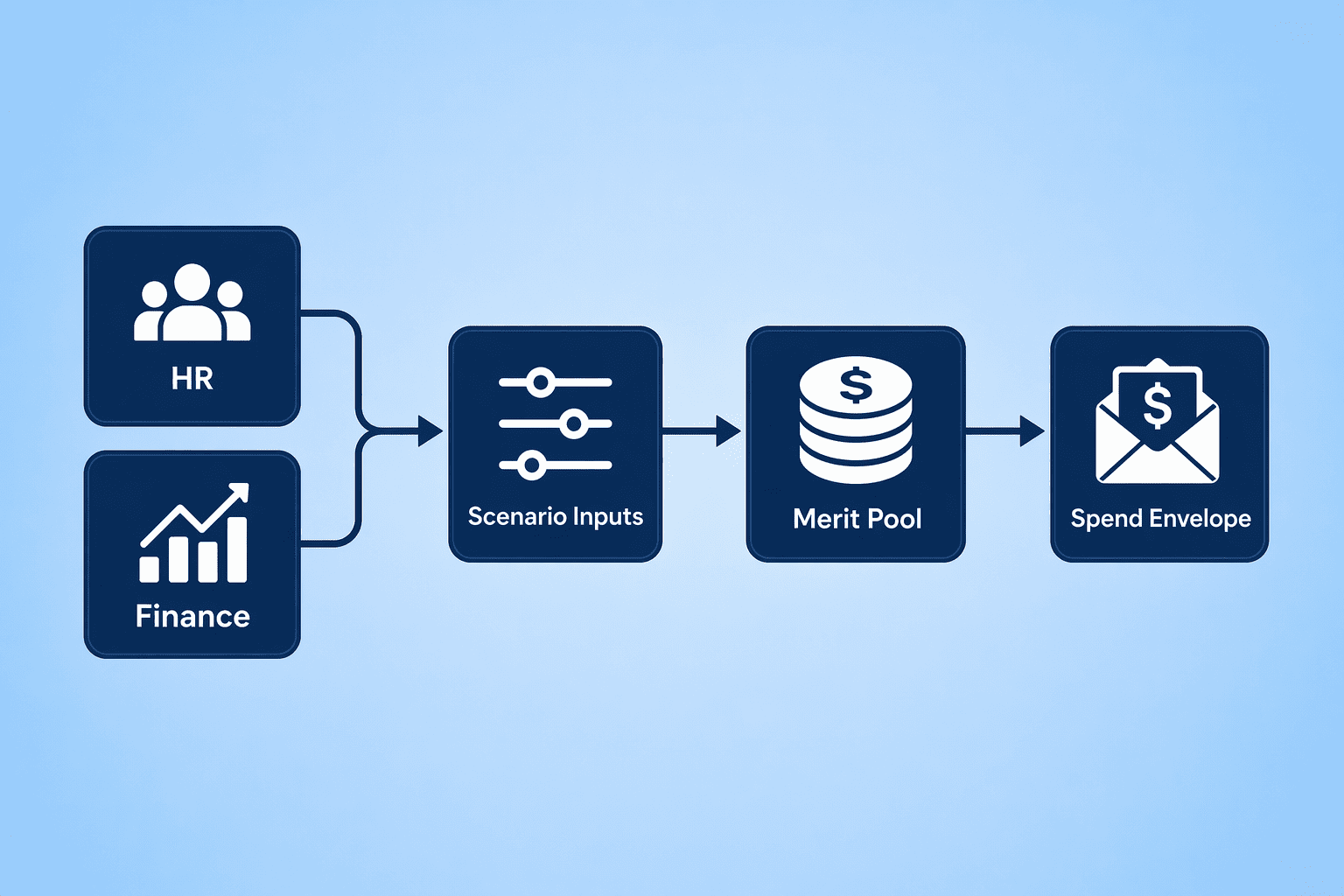
Without a clear budget, compensation adjustments can derail business planning or create inequities. Budget modeling is a joint forecasting process between HR and Finance that translates business strategy into spend envelopes before managers ever see a number.
The partnership must test scenarios. A 3.5% merit pool carries different retention risk than a 4.0% pool weighted toward top performers. The cost of closing market gaps for roles with the highest attrition needs its own line. At commercetools, the budgeting conversation with Finance starts in October for a February cycle launch, a four-month runway that allows for scenario testing and multi-level approval before managers receive their allocation envelopes.
The output is a finalized merit matrix and budget guardrails. These guardrails define which performance tier receives what, how much market adjustment latitude exists, and the total spend Finance has approved. This must be complete before manager workflows open. Once managers begin making recommendations, reopening the budget resets trust in the process.
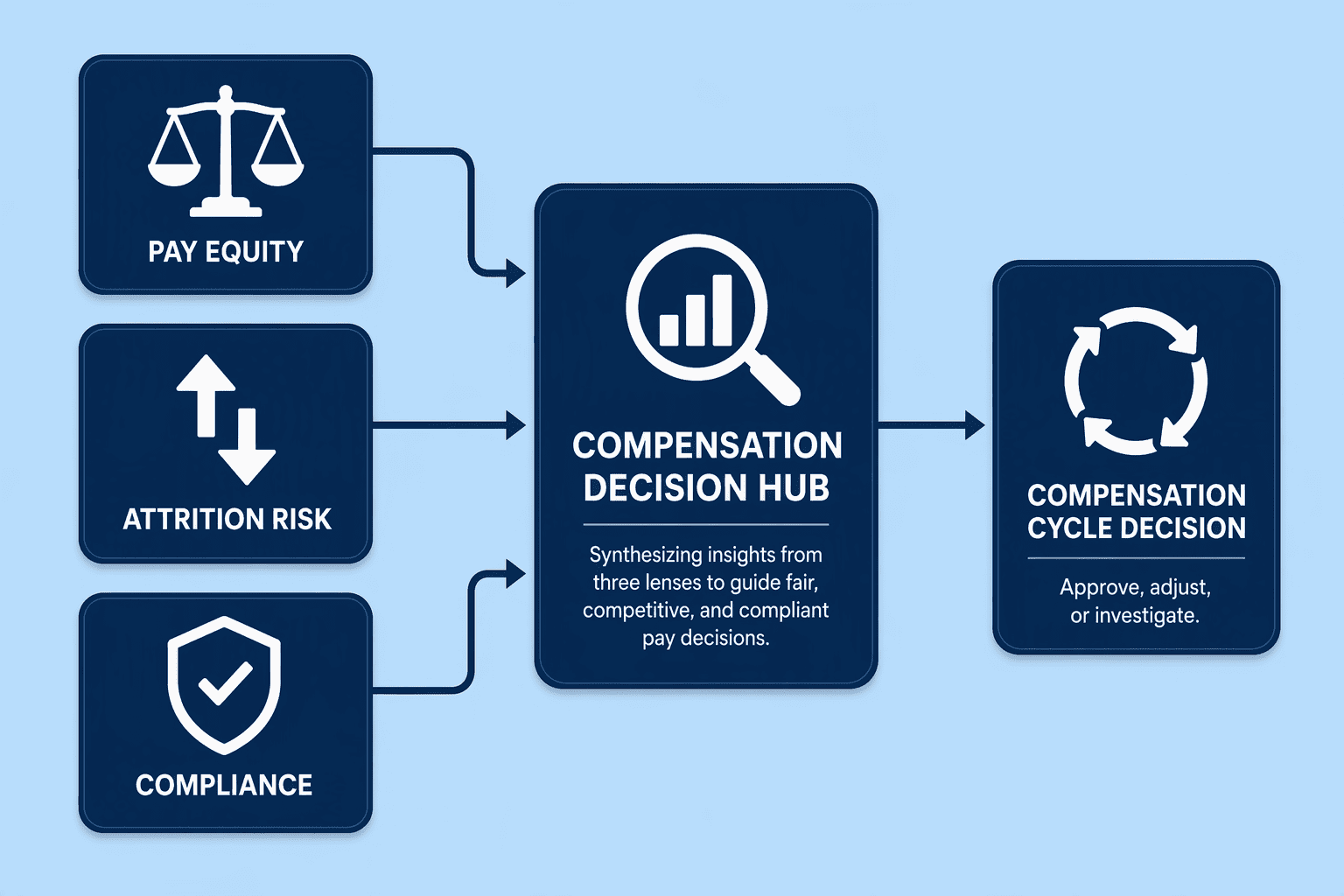
The pre-cycle analysis covers three dimensions at once:
Technology is where the cycle design becomes operational reality. Without it, you are emailing spreadsheets and reconciling version conflicts. With it, you build a standardized manager experience that enforces budget guardrails automatically. 80% of compensation processes are automated and streamlined using Workday. These are the configuration steps that must be completed before the execution phase opens.
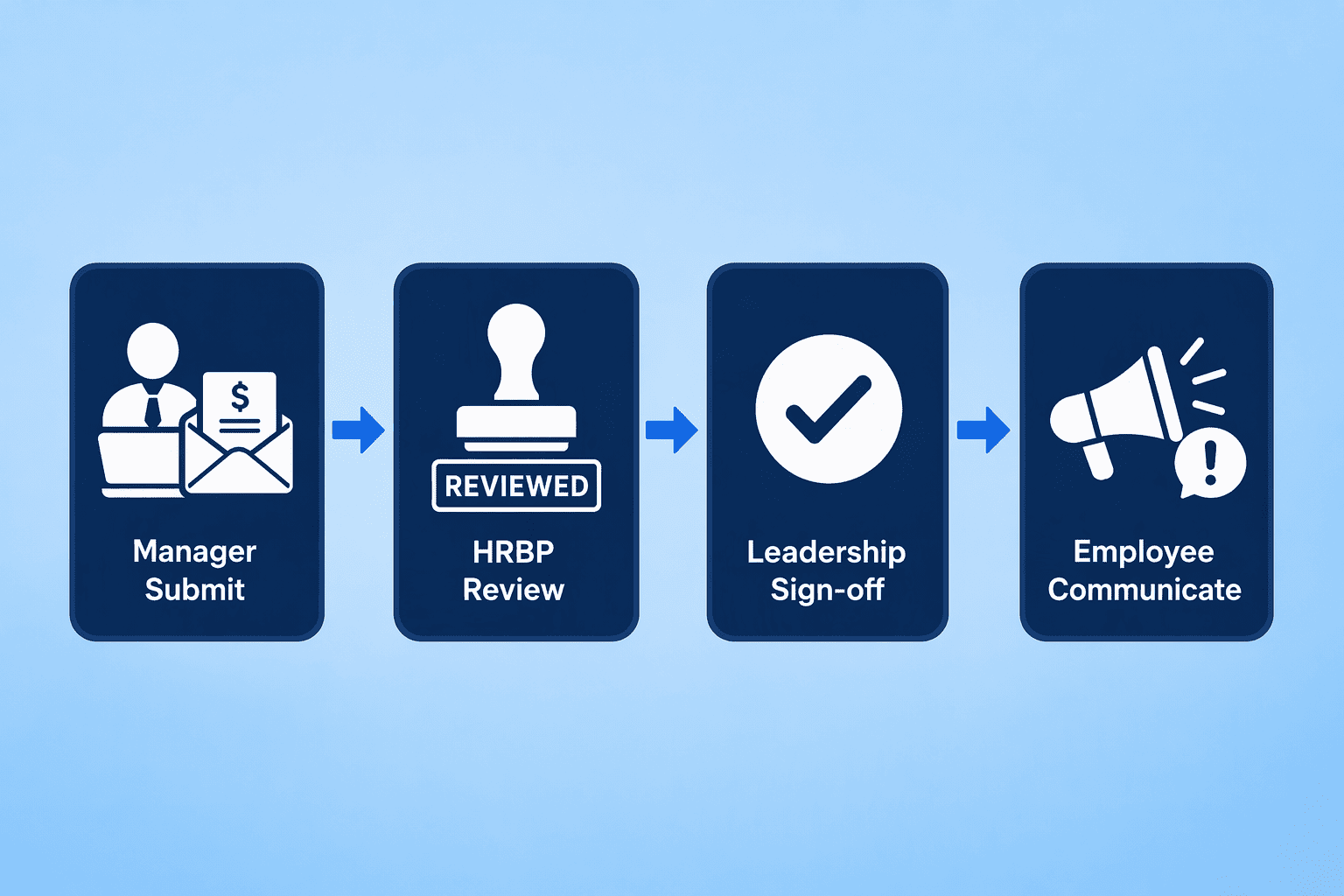
The execution sprint begins when budgets are distributed to managers and the approval workflow goes live. Managers must work within their configured envelopes, submitting recommendations that route through HRBP and leadership sign-offs in sequence. An admin publishing a cycle does not, by default, trigger notifications to workers or managers, so launch must be accompanied by explicit communication and a known deadline.
Communication closes the loop and is the moment the cycle becomes a retention event or a compliance liability. Top performers hear a narrative linking their impact to their raise and market position. Consistent contributors hear an honest assessment of their performance and development trajectory. Both conversations must be backed by the data prepared in earlier steps; a compa-ratio without explanation is just a number. Deliver the reward letter accurately and empathetically, with the manager equipped to discuss how the decision was reached.
The cycle ends when the audit is complete and the findings are stored for next year's preparation phase, not when the last reward letter goes out.
Conduct a post-cycle audit measuring budget adherence, pay equity outcomes, and manager process compliance. Did actual spend match the approved envelopes within an acceptable variance? Did any pay equity gap widen rather than close during the cycle?
Which managers required the most overrides, and what does that signal about training or guidance gaps next year? Store these insights to refine your compensation philosophy, job architecture, and budget models before the next cycle begins.
A platform like CompUp provides real-time pay equity analysis and compa-ratio tracking, which transforms this audit from a manual forensic exercise into a dashboard review that feeds continuous improvement. The goal is a performance-reward system where each year's cycle is measurably more disciplined, equitable, and strategically aligned than the last.
A compensation review cycle is a reinforcing loop: philosophy shapes budget, budget drives manager decisions, manager decisions become reward letters, and the post-cycle audit refines the philosophy for next year. Break any link in that chain and the cycle reverts to a reactive spreadsheet exercise that creates inequity instead of fixing it. The 2026 cycle requires integrated technology as the operational backbone, strong HR-Finance partnership for budget discipline, and a pre-cycle pay equity audit as a non-negotiable risk control.
Treat the compensation review cycle as a disciplined, tech-enabled business ritual rather than a recurring administrative chore. Done right, it consistently delivers fair, competitive, and strategically aligned pay outcomes. If you're weighing options, CompUp is worth a closer look.
The cycle splits into a preparation phase and an execution phase. Preparation includes revisiting the compensation philosophy, updating job architecture and salary bands, gathering market benchmarking data, calibrating performance scores, modeling the budget with Finance, and running pay equity and compliance audits. Execution includes configuring technology, distributing manager budgets, running approval workflows, communicating results, and conducting post-cycle audits.
The total timeline typically runs 4 to 6 weeks. Preparation takes roughly half that window: philosophy alignment, data gathering, budget modeling, and equity audits. Execution consumes the second half: configuring the system, opening manager submissions, running approvals, and communicating outcomes. Many companies begin budget conversations with Finance 3 to 4 months before the cycle launches.
Three core inputs are required:
A worker must also have an active status, an active contract, a job title on their profile, and a total compensation amount listed to be eligible for the cycle.
Refresh salary survey data against your current job catalog before the cycle begins. Use this external data to validate internal salary bands and identify roles where market rates have shifted. During the cycle, market adjustments should address gaps where current pay has fallen significantly behind market, keeping the adjustment separate from merit increases tied to performance.
Compensation management software centralizes pay data and automates merit matrix calculations, approval chains, budget enforcement, and compliance checks across geographies. Platforms can cut planning cycle time by 50% and automate roughly 80% of compensation processes. This eliminates spreadsheet versioning, manual eligibility tracking, and approval bottlenecks that cause delays and errors.
A compensation review cycle is an annual operational event focused on adjusting existing employees' pay within the current org structure. Strategic workforce planning is a continuous, multi-year process that determines future headcount needs, skill gaps, and organizational design. The compensation cycle is a tactical execution step that implements the pay decisions required by the workforce plan; they are related but distinct activities.
Community Manager (Marketing)
As a Community Manager, I’m passionate about fostering collaboration and knowledge sharing among professionals in compensation management and total rewards. I develop engaging content that simplifies complex topics, empowering others to excel and aim to drive collective growth through insight and connection.
Revolutionizing Pay Strategies: Don't Miss Our Latest Blogs on Compensation Benchmarking