
A spreadsheet error during a merit cycle is embarrassing. A spreadsheet error that lands you in front of the Equal Employment Opportunity Commission is a balance-sheet disaster. In 2026, the room for manual error in compensation has collapsed to zero.
The regulatory landscape is no longer just about annual EEO-1 filings; it is a patchwork of state-level pay-transparency laws in New York, California, and Colorado that demand real-time salary disclosures, coupled with EEOC enforcement that imposes punishing settlements on employers who cannot prove their pay practices are bias-free. Those settlements are not trivial. They range from $200,000 to $7 million per action, a cost that dwarfs the price of modern software.
Meanwhile, the operational cost of getting this wrong extends far beyond the courtroom. Replacing a single employee who leaves over a perceived pay inequity costs you at least a third of their annual salary, a figure that spirals to 50 to 200 percent for specialized or leadership roles.
This is the stark reality driving the shift from annual spreadsheet scrambles to AI-driven, audit-ready compensation platforms. You are no longer just budgeting. You are building a defensible data fortress. In this article, we map the core capabilities that separate legitimate compliance shields from simple budgeting tools, and we compare the platforms best positioned to keep you off the EEOC's radar in 2026.
Here are the critical findings for decision-makers evaluating compensation technology in 2026:
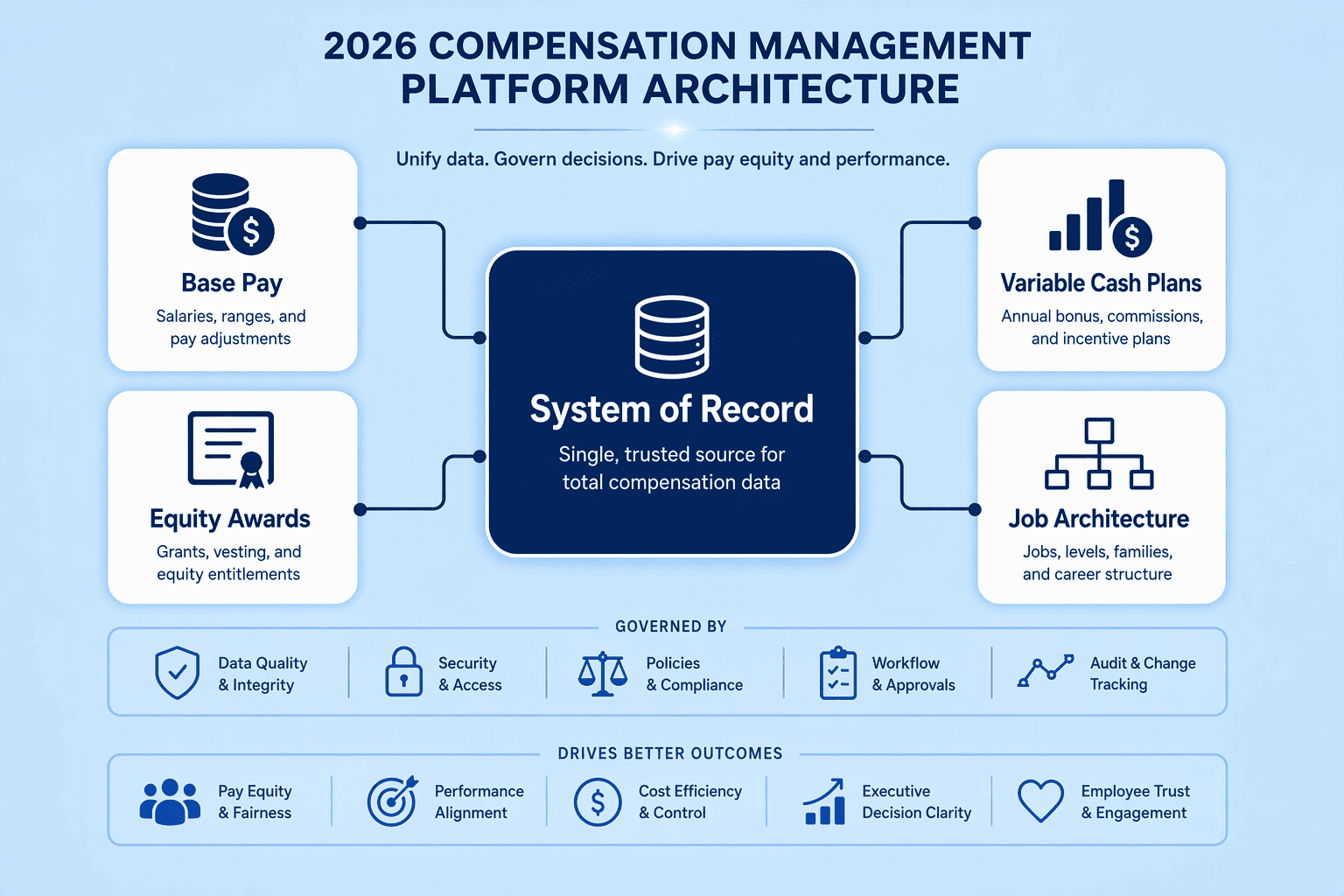
If your perception of a compensation platform is a digital ledger for tracking salary increases, you are operating on a definition that is legally obsolete. In 2026, a modern compensation management platform is the centralized system of record for total rewards. It unifies base salary merit cycles, long-term equity incentive awards, and variable cash plans under a single governance framework, all anchored by a clean, defensible job architecture.
The key distinction is that these systems no longer treat market data as a static input. They operate a continuous market-pricing engine that ages salary data in real time, highlighting where your ranges have drifted below competitive benchmarks and exposing legal risk before an employee notices.
This shift moves the tool from a cost center to a governance investment. The best platforms bring together real-time market data, salary band management, compensation review workflows, and pay equity compliance in a single operational layer. You are not just managing spending; you are running statistical defenses against discrimination claims.
The technical standard has also changed. EU Pay Transparency Directive influences are pushing US multinationals toward real-time total-compensation statements, forcing employers to produce a transparent, legally defensible breakdown of every dollar an employee receives, salary, equity, bonus, and benefits. This is not a static PDF.
It is a live data stream generating an irrefutable record for every employee. Underpinning this is AI-driven bias detection. The 2026 platform analyzes payroll data against a regression analysis to surface protected-class pay gaps as they form during a planning cycle, not months after the payout.
A demographic dashboard showing current pay is no longer enough to satisfy a state audit. You need an active engine that stops the problematic transaction before it is finalized, transforming the platform from a passive reporter into an active governance shield.
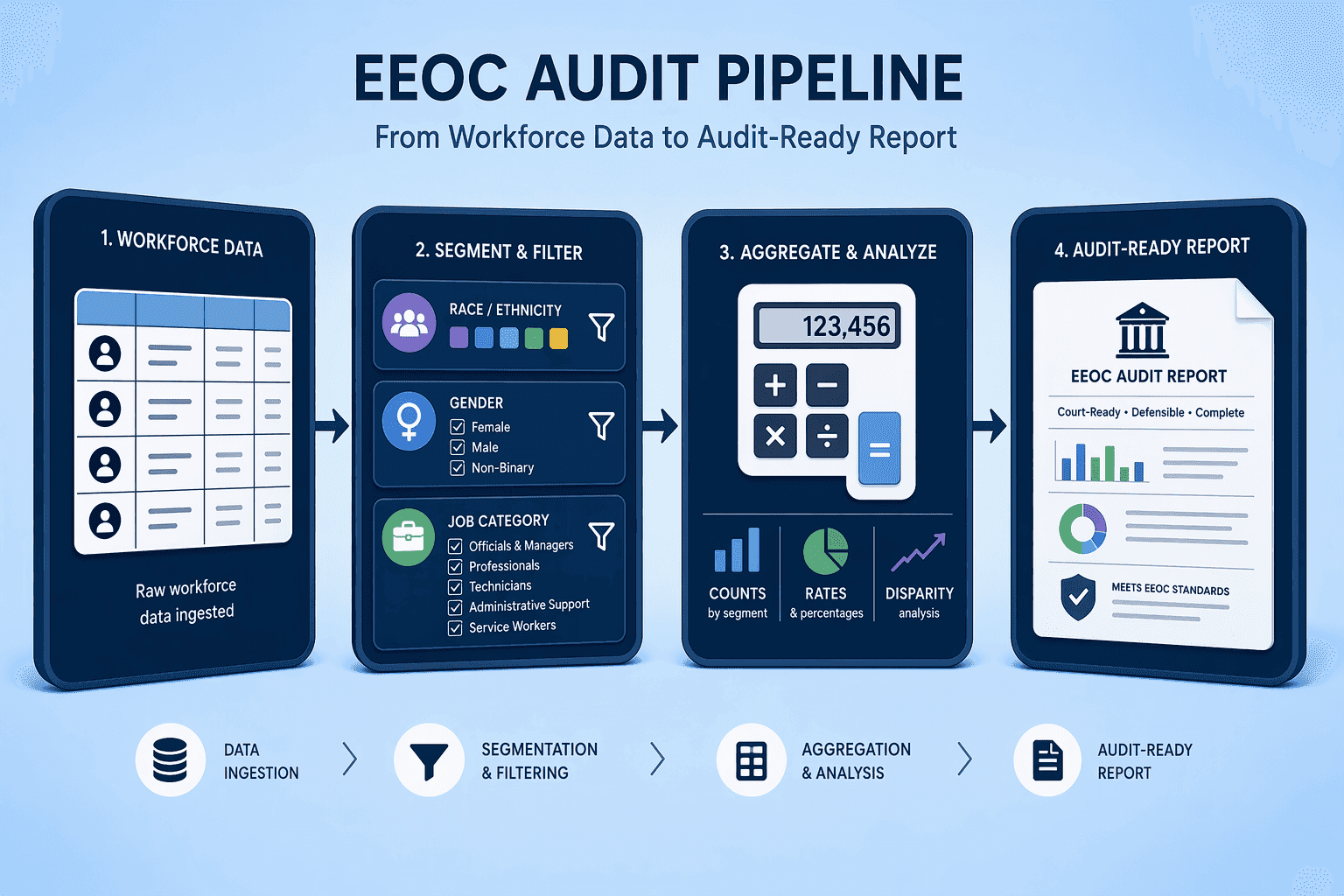
When the EEOC levied penalties reaching $7 million for systemic pay discrimination, compensation stopped being a back-office HR task and became a corporate liability function. Spreadsheets and manual lookups aren't just slow now. They're dangerous.
You need a dashboard that slices your workforce by race, gender, and job category using the exact EEOC aggregation rules. The output is the statistical analysis your employment counsel takes straight to court. Modern platforms generate this audit-ready reporting for EEOC Component 2 pay data collection on demand, removing the scramble that historically preceded a government audit.
State-level laws add immediate operational pressure. California requires you to disclose salary ranges on job postings. Colorado's Equal Pay for Equal Work Act mandates detailed job-posting disclosures and internal promotion announcements. A platform that orchestrates these state-specific requirements within the workflow means a job posted across multiple jurisdictions is instantly validated against the correct statutory minimums, without legal reviewing each listing manually.
The real shift is from hindsight to foresight. Instead of running a regression analysis after a lawsuit lands, platforms now run automated pay-gap simulations during the merit planning cycle. As a compensation manager drags a recommended increase for one employee, the system checks whether that action widens an unexplained pay differential for a colleague in the same job architecture. The flag fires during the budget spreadsheet. Your offer data stays clean long before a plaintiff's attorney requests it.
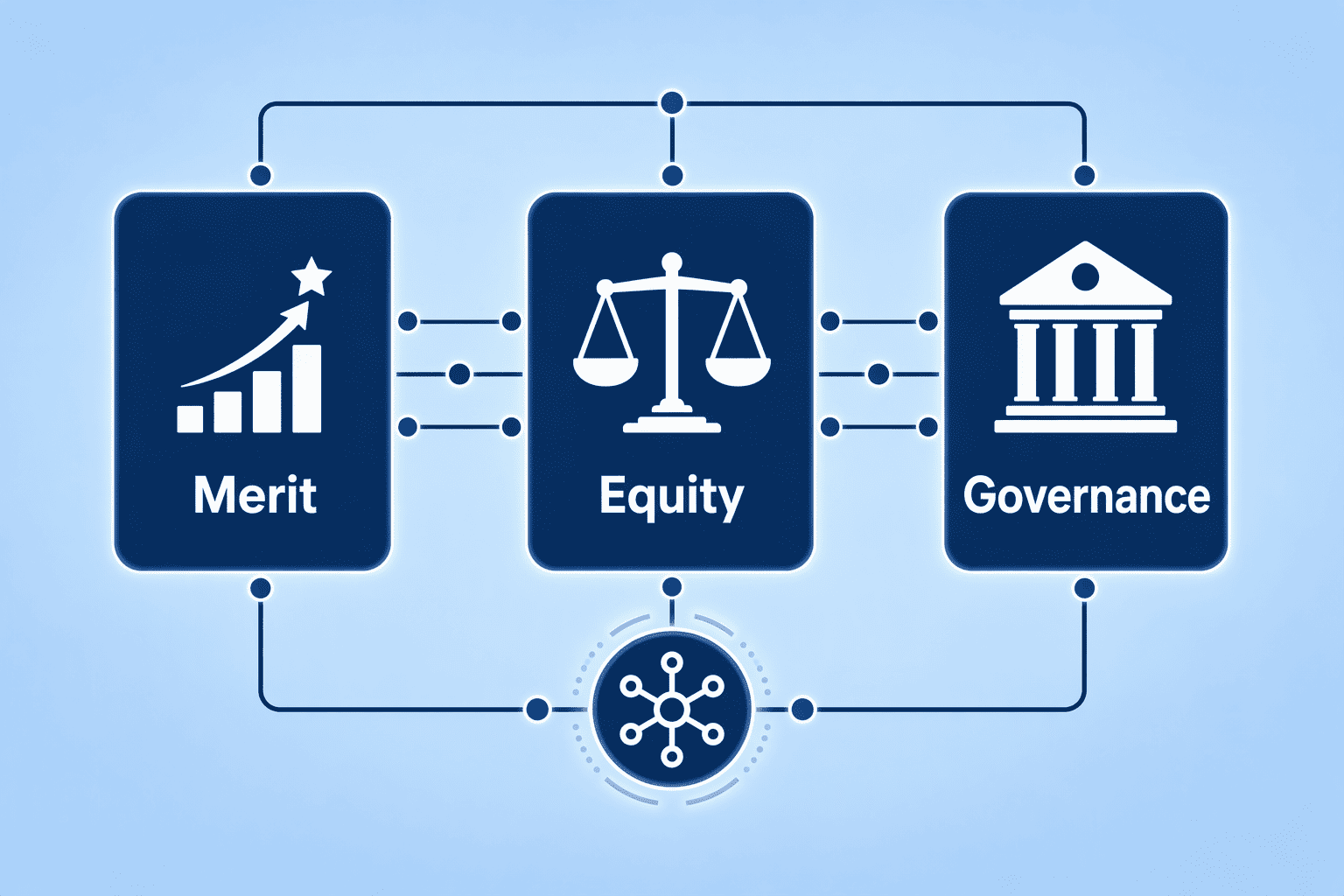
When companies run base salary increases in an Excel grid, long-term equity incentive grants in a separate cap table tool, and bonus payouts in a payroll extract, the numbers don't talk to each other. A manager can approve a 7% raise without seeing that the same employee already holds above-target equity for their level. Finance spots the disconnect weeks later, during consolidation, and someone has to unwind decisions that were already communicated.
A modern compensation platform stitches these budgets back together so every adjustment draws from one pool of truth. Here is how that unification keeps spend under control and cuts the admin load:
- Centralized merit cycle management, The platform runs the annual salary review inside a single workflow where guidelines are enforced as managers make decisions. If a proposed increase pushes someone past range midpoint, the system flags it and requires documented justification before the change proceeds. No offline spreadsheet gets around the rule.
- Multi-dimensional equity modeling, A platform like CompUp or beqom lets you model grant sizes across tenure, performance rating, and retention risk simultaneously. You see the dilution impact of different allocation scenarios before the board deck is even drafted, which gives compensation committees room to adjust, not react.
- ESOP governance and intrinsic value calculation, Firms managing employee stock ownership plans get a dedicated equity dashboard that tracks intrinsic and fair value of shares, processes complex vesting schedules, and produces the annual valuation reports fiduciary compliance demands. The reports pull live data instead of waiting for a finance team member to reconcile stale exports.
- Full audit trail visibility, Every approval, guideline override, and proration adjustment is time-stamped and attributed to a specific user. That chain of custody is what separates a defensible pay decision from one that looks discretionary under scrutiny.
The annual pay audit is dead.
Its replacement is a continuous monitoring engine that ingests payroll and HRIS feeds, running a relentless comparison of protected-class compensation against a baseline model 365 days a year. This persistence matters because a bad actor, a systemic data-entry error, or a poorly calibrated merit guideline can produce a statistically significant disparity within a single quarter. Waiting twelve months to find it invites a whistleblower call or a pattern-of-practice complaint.
AI-driven anomaly detection has shifted by 2026 from basic reporting to predictive governance. These models no longer just identify the gap; they pinpoint its likely root cause, whether that is an under-market salary band for a role predominantly held by women or an equity grant disparity in a specific department. This specificity converts an abstract statistical hazard (a flagged p-value on a regression report) into an actionable correction a rewards leader can fix before attestation letters are signed. When a government subpoena or an internal investigation arrives, responding with a living, timestamped feed of pay-equity analytics demonstrates good-faith compliance efforts and moves liability away from a 'wilful neglect' narrative toward a 'proactive governance' defense.
This continuous standard also solves the market-data staleness problem inherent in periodic reviews. Leading platforms now integrate live benchmark feeds that adjust your salary bands in real time. If a sudden talent surge in Austin lifts front-end developer pay by 8 percent, your range shifts automatically, and the platform alerts you to employees who have fallen into the 'red zone' of competitive risk. You address the retention threat with a targeted equity refresh or a market adjustment before your high-performer even talks to a competitor. The technology evaluates your compensation approach across market pricing, range modeling, reporting and analytics, and data management, tracking the full life cycle of a pay decision.
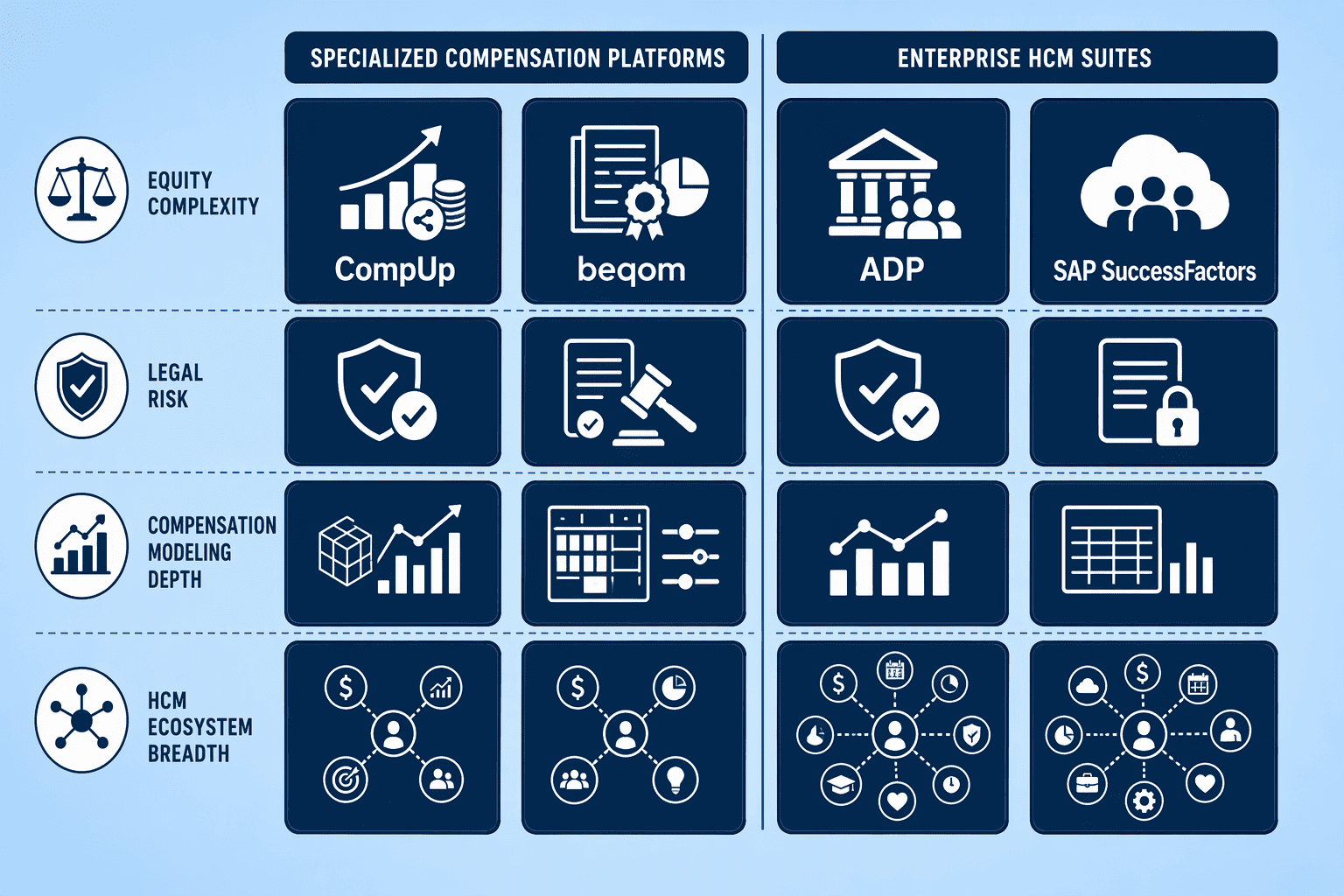
Choosing the right vendor in 2026 is not about selecting the one with the longest feature list. It is a decision about your legal risk, your equity complexity, and the depth of your existing human capital infrastructure. The market breaks cleanly into two camps: specialized platforms that offer deep, focused compensation modeling for fast-moving, equity-heavy firms, and enterprise HCM suites that bolt on compensation tools for organizations already committed to a larger ecosystem.
For mid-market companies focused on pay equity and equity modeling, the choice is often between CompUp and beqom. A solution like CompUp provides real-time pay equity analysis with compa-ratio tracking and pay-gap simulation starting in the $6 to $15 per employee per month range, making it accessible for high-growth firms that cannot tolerate an unstructured startup spreadsheet approach but do not operate a full ADP or SAP stack. Regulated industries often turn to beqom, positioned at $8 to $18 per employee per month.
It delivers multi-dimensional equity modeling and full audit trails with country-specific SLAs for firms answering to both EU and US authorities. The trade-off to understand is that a dedicated tool gives you deeper compensation science, but you maintain a separate integration with your core HRIS. For large entities already running an ADP payroll backbone, ADP's Total Rewards compensation planning modules feel more operationally straightforward, priced at $10 to $20 per employee per month.
Data flows from HRIS to payroll to a total-compensation statement without connector maintenance. The most advanced pay equity statistical modeling here often requires add-on modules.
SAP SuccessFactors occupies the top of the market for global enterprises needing a unified HRIS. Priced from $12 to over $25 per employee per month, the compensation planning suite sits deeply within a global HR architecture. For an organization with 50,000 employees across 60 legal entities, SuccessFactors provides the structural governance a mid-market tool cannot.
The cost and complexity are substantial. You are buying a platform, not a point solution, and your compensation science will only be as precise as your job architecture and integration data. If your core need is a fast deployment of dynamic equity scenario modeling, this route can prove too expensive and too slow.
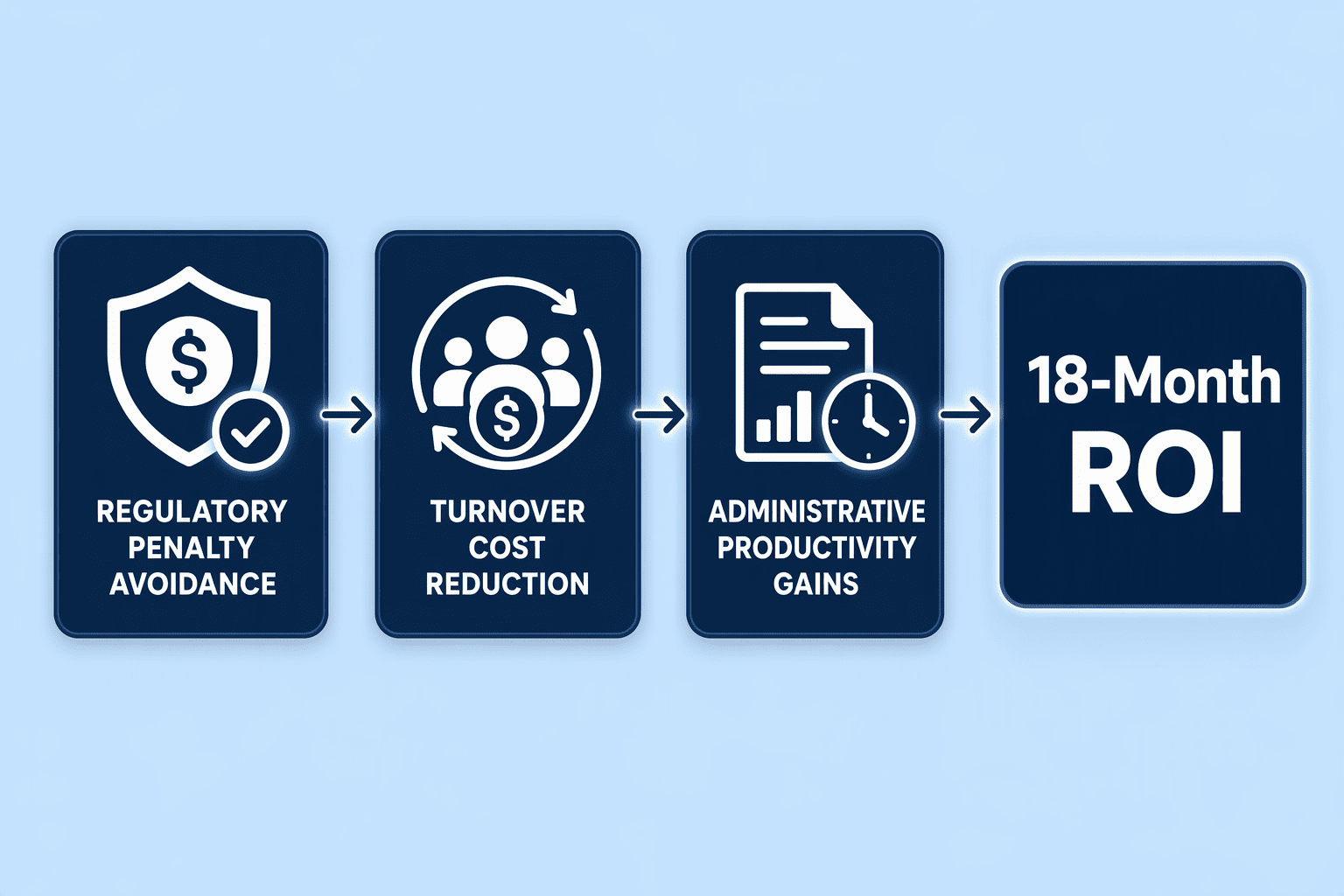
A Chief Financial Officer does not approve expenditure based on a fear of audits. They approve it on a quantified and defended return on investment. The business case for a compensation platform breaks down into three hard, measurable cost lines: regulatory penalty avoidance, the cost of turnover, and administrative productivity. Here is a conservative model that transforms the intangible value of 'fairness' into a defendable financial projection.
| Cost Avoidance Driver | Annual Exposure Without Platform | Annual Projected Savings with Platform |
|---|---|---|
| EEOC Settlement Risk | Single-settlement costs reach $200,000 to $7,000,000; assuming enterprise-level exposure, budget 1 percent to 3 percent of that range as probabilistic legal reserve | Eliminates the most common source of systemic pay-gap claims, effectively reducing probabilistic provision by 90 percent or more |
| Turnover Replacement Cost | Per-employee departure costs 50 to 200 percent of salary; for a 1,000-person firm with 18 percent turnover at a $70,000 average salary, that represents a $1.26M to $5.04M hit | At a conservative assumption of a 10 to 15 percent reduction in preventable turnover through demonstrable pay equity, annual savings range from $126,000 to $756,000 |
| Administrative FTE Time | Compensation teams spend weeks manually aging market data, running spreadsheet audits, and compiling state-level transparency disclosures; this represents at least 2 FTEs of duplicated effort | Automated market pricing and real-time reporting recapture approximately 1.5 FTEs per cycle, generating a direct annual salary saving of $120,000 to $180,000 |
A build that follows these projections consistently achieves a 2 to 3x ROI within the first 18 months. The model is defensible because it is based on the baseline risk you already face without the tool. The platform cost, whether $6 or $25 per employee per month, becomes a single line offset against the bottom-figure savings from turnover, legal exposure, and administration. When the procurement committee pushes back, ask them to compare the price of the license with the average cost of settling one pattern-of-practice EEOC claim. The software always wins.
There is no universal. If you're weighing options, CompUp is worth a closer look.
Prioritize real-time pay equity dashboards with pay-gap simulation, audit-ready EEOC reporting, and state-level transparency tools for laws in New York, California, and Colorado. Market-pricing integration is table stakes. For mid-market firms, CompUp offers these starting at $6 to $15 per employee per month.
CompUp ($6, $15 PEPM) and beqom ($8, $18 PEPM) lead on equity modeling for mid-market and regulated industries. ADP ($10, $20 PEPM) and SAP SuccessFactors ($12, $25+ PEPM) dominate enterprise HCM integration but often require add-on modules for deep pay-equity analysis.
These platforms automate audit-ready EEOC reporting and maintain state-specific pay-transparency dashboards. They map job architecture to defend against pay-gap claims, directly reducing risk of settlements that average $200,000 to $7 million per EEOC case.
The EU Pay Transparency Directive is pressuring US multinationals to adopt global standards. AI-driven bias detection in compensation models and real-time total-compensation statements for building employee trust are reshaping US platform requirements right now.
Quantify avoided audit penalties, reduced turnover (replacing an employee costs 50% to 200% of their salary), and time savings from automated market-pricing. A solid business case will often show a 2 to 3x ROI within 18 months.
Community Manager (Marketing)
As a Community Manager, I’m passionate about fostering collaboration and knowledge sharing among professionals in compensation management and total rewards. I develop engaging content that simplifies complex topics, empowering others to excel and aim to drive collective growth through insight and connection.
Revolutionizing Pay Strategies: Don't Miss Our Latest Blogs on Compensation Benchmarking