
Your compensation lead sends an email at 11:47 p.m. with a spreadsheet titled `CompCycleFINALv9TuesdayFIXED.xlsx`. By morning, your organization has published a cycle of performance-based pay adjustments that legally binds you to every number in those cells.
The wave of pay transparency legislation crashing across the United States and the European Union has transformed what that spreadsheet represents. It is no longer an internal HR document. It is a public-facing artifact that must withstand regulatory scrutiny. According to Jackson Lewis P.C., the evolving patchwork of state and EU pay transparency laws is mandating public disclosure and rigorous justification of pay decisions, making a defensible merit cycle non-negotiable in 2026.
If your merit planning process runs on a disconnected set of tools, you are building legal exposure into every salary recommendation. Undetected pay gaps, inconsistent salary ranges, and the inability to produce a defensible audit trail are not theoretical risks. They are the direct output of a fragmented workflow.
This is not a matter of buying another analytics module. It is a structural necessity to connect pay transparency compliance directly to the annual merit cycle inside a single operational system. Here, we examine the platforms designed to close that gap.
For HR and Total Rewards leaders evaluating this intersection, the landscape demands a clear operational stance. Here are the pivotal realities driving the 2026 market:
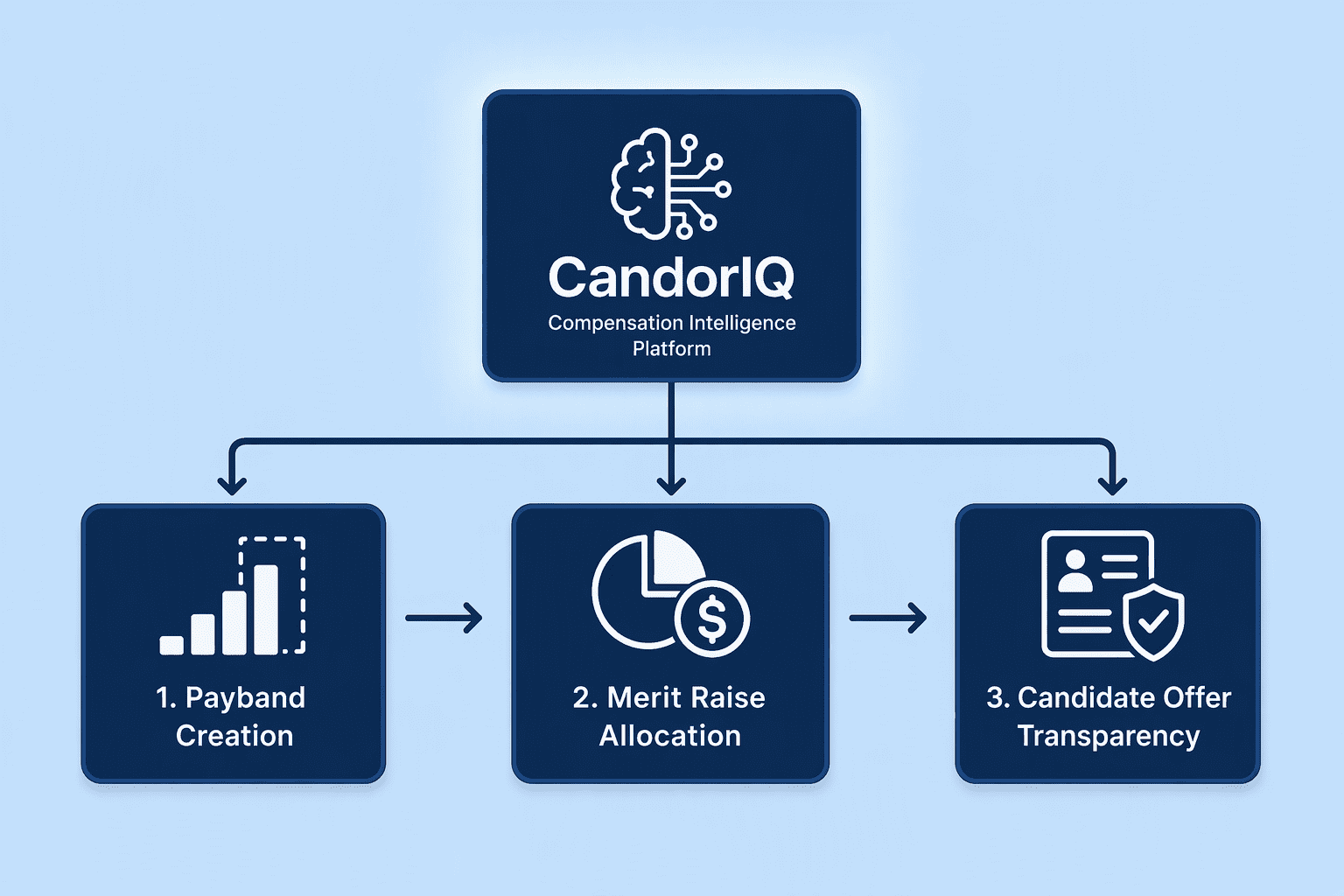
CandorIQ is the platform most directly engineered to connect pay transparency compliance with the active mechanics of merit planning by combining payband creation, merit raise allocation, and candidate offer transparency into a single defensible system.
The core innovation is operational. Instead of exporting pay equity reports to inform disconnected budget spreadsheets, managers make recommendations inside a system that surfaces real-time compa-ratios and range penetration against every proposed increase.
CandorIQ specifically combines pay transparency, budget forecasting, and merit cycle automation into a single platform. This coupling means that the pay ranges you define for transparency disclosures become the active guardrails for your merit cycle. For organizations that find their compensation review process spiraling into spreadsheet errors and audit anxiety, CandorIQ replaces that patchwork with a workflow where compliance is baked into every step.
CompUp Workforce Planning (YC S22) addresses the upstream financial blind spot that undermines pay transparency by translating headcount scenarios directly into compensation budget pools before the merit cycle begins. You can use a tool like CompUp to move from a reactive allocation of the merit budget to a connected model. Key capabilities that strengthen this connection include:
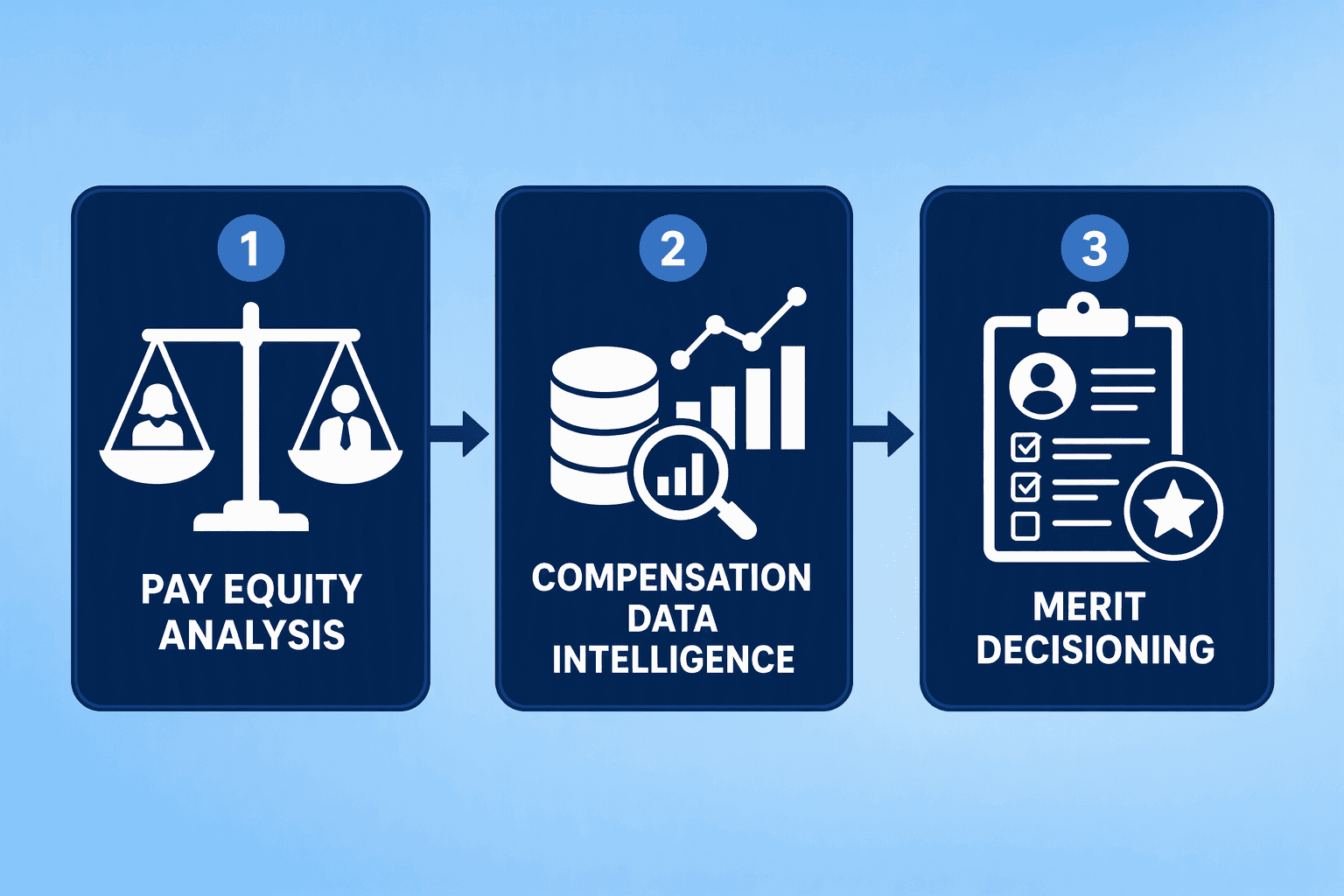
beqom operates as a purpose-built compensation management tool that unifies compensation data, pay management, and AI intelligence to help organizations make equitable pay decisions, making it a strong enterprise alternative for the analytics layer. To understand how this depth supports a merit cycle, examine the functional chain:
HRSoft Compensation Management is designed to systematically guide and control calculation and allocation of merit, bonus, and equity awards across the entire compensation lifecycle. The platform's transparency value comes from baking audit controls directly into the flow of money. Here is how its dedicated lifecycle maps to compliance requirements:
| Functionality | Operational Execution | Transparency Link |
|---|---|---|
| Merit Planning | Configurable grids with approval routing for manager recommendations | Every recommendation, adjustment, and final amount is timestamped and attributable, forming the basis of a defensible audit trail. |
| Long-Term Incentive Management | Systematic calculation and granting of equity awards | Ensures equity grants are distributed against documented eligibility and performance criteria, reducing irregular dispensing risks. |
| Compliance Auditing | Built-in reporting and variance tracking against approved budgets | Provides the documentation an organization would hand to legal counsel during an audit or in response to an employee claim. |
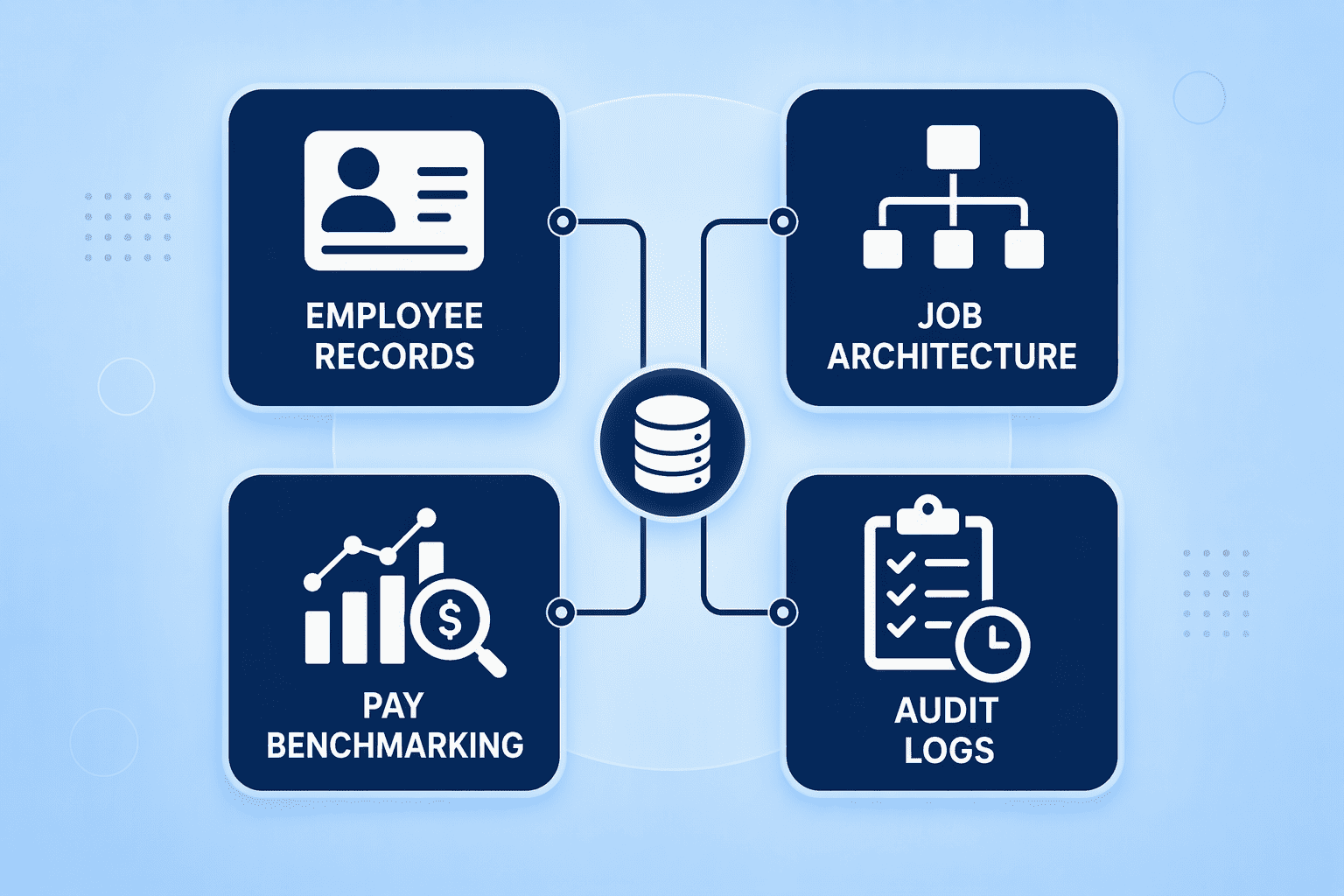
For enterprises already running their core HRIS on Workday, the path of least resistance is often activating the embedded compensation tools. The platform offers configurable grids for managing merit and bonus cycles, pay benchmarking against market data, and audit frameworks that capture user activity and approvals natively within the HCM system.
That native integration solves a major data fragmentation problem. Because Workday holds your employee records, job architecture, and performance ratings, a compensation cycle executed inside the system does not require a risky data export. The total rewards profiles of individual employees remain connected to the actual pay decisions and the approved range structures.
The potential gap emerges when you need dedicated pay transparency reporting that goes beyond standard HR analytics. A dashboard showing demographic breakdowns may fall short of the statistical report formats required by outside counsel or specific state pay-transparency filings. The audit framework is solid, but catching subtle disparities under a continuous monitoring model often demands the analytical depth of a specialized pay equity platform.
The integration advantage is the real draw. A single source of truth for employee data means the transparent pay range you publish for a role is the same data feeding the compensation grid managers use. The published range and the operational range stay locked together.
A transparent pay structure starts with a defensible market price. Salary.com's CompAnalyst converts market intelligence into structured, publishable pay ranges that guide merit increase recommendations. The workflow begins with market-pricing a job. CompAnalyst ingests survey data and provides statistical cuts to help you determine a competitive midpoint for a role in a specific geography and industry. The analytics feature generates dashboards for reporting merit bonuses and pay equity.
Once you set a range, that dataset flows into the merit planning module. Managers see the compa-ratio for every employee against the published range. A recommended increase that pushes an employee outside the range or into an equity violation is visible at the moment of decision.
This coupling between the market data that justifies your ranges and the tool that executes your merit increases closes a compliance gap. Every pay increase is anchored to a documented market reference, supporting the justification that new pay transparency laws require.
For organizations where market data quality is the primary concern, CompAnalyst provides the evidentiary backbone. The risk in a decoupled stack is that your compensation team spends weeks building a salary structure in a market pricing tool, only for managers to execute a merit cycle in an HRIS with hardcoded, stale ranges. Unifying these steps, even across product boundaries, prevents that drift.
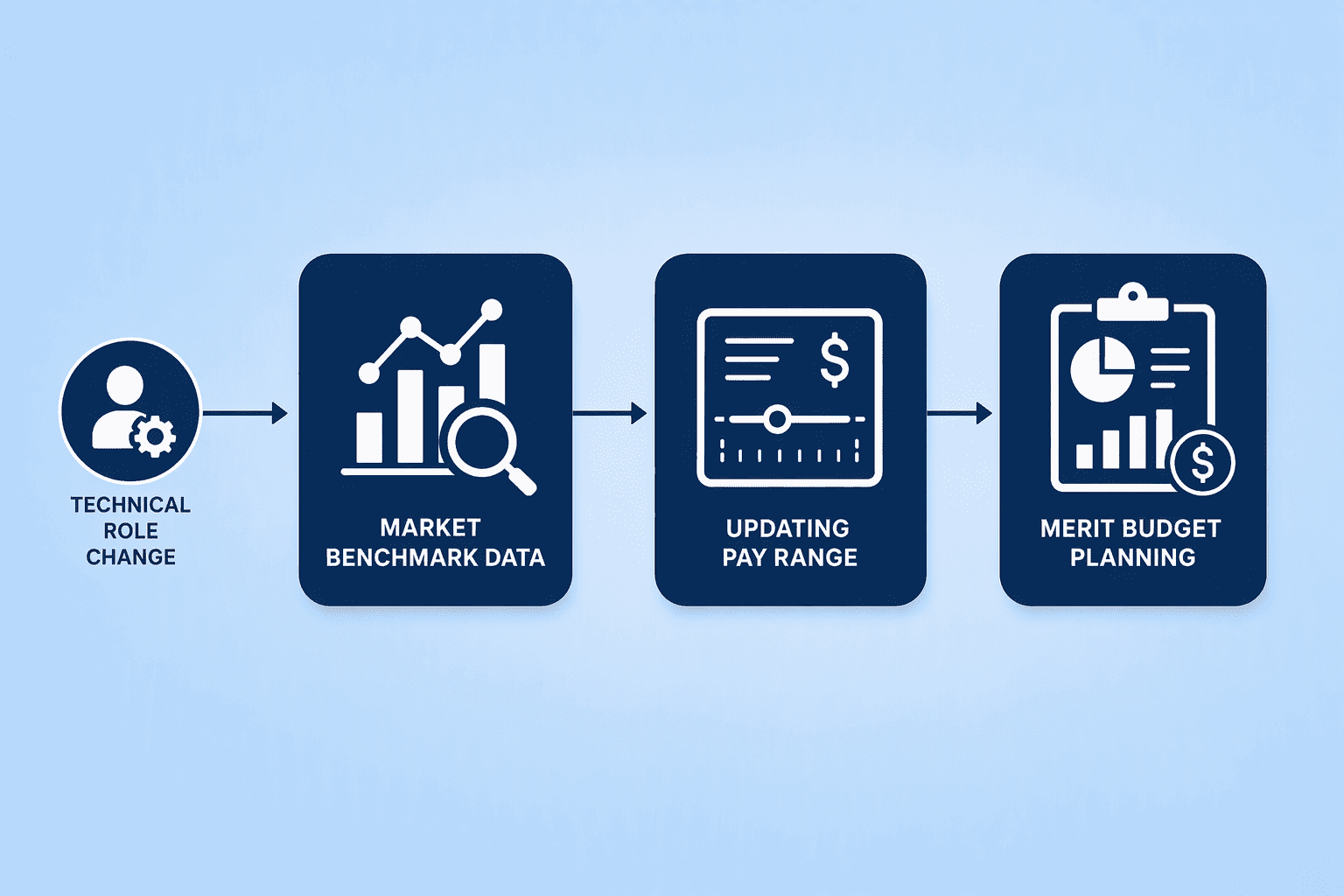
Pave addresses the data staleness problem that bedevils traditional compensation planning by connecting its real-time market data network directly to planning workflows. The benchmarks that inform your pay ranges and the budgets that fund your merit increases update continuously, rather than waiting for an annual survey refresh.
This real-time connectivity changes how a merit cycle operates. When market conditions shift rapidly for a specific technical role, the platform surfaces that movement inside the planning tool. A manager preparing merit recommendations for a software engineering team sees benchmarks that reflect current offers, not data that is six months old. You can adjust ranges mid-cycle to prevent offers and internal pay from drifting out of parity with the market.
The transparency benefit matters just as much. Publishing a pay range backed by fresh, real-world compensation data from Pave's network gives you a stronger justification for the figures than a range set from a legacy survey. The planning features then let you model the cost of adjusting ranges for a department and see the impact on the merit budget allocation before you lock anything in place.
A pay equity audit run in a siloed analytics tool has no connection to the offer that Talent Acquisition extends tomorrow or the budget that Finance approved last month. A disconnected stack guarantees drift.
When the compensation team runs a pay equity analysis in a specialized platform like beqom or Syndio and identifies a gap, that insight must be translated into a manual action. The merit planning spreadsheet needs an updated figure. The approved salary bands in the ATS need a manual override. These manual handoffs fail routinely. Inconsistent ranges across the organization, where a posted salary band on a job listing differs from what the compensation team modeled elsewhere, become a legal liability as transparency laws mandate public accuracy.
The collaborative model that connects HR, Finance, and TA on a single platform like CompUp Workforce Planning or inside the unified workflow of CandorIQ removes these handoffs. The merit budget that Finance models in a headcount scenario is the same data pool that HR uses to generate manager worksheets with embedded pay equity guardrails. Those approved ranges are then the same figures surfaced to TA for offer generation. You stop preparing for an audit and instead produce continuously auditable data, eliminating the crisis-driven scramble for documentation.
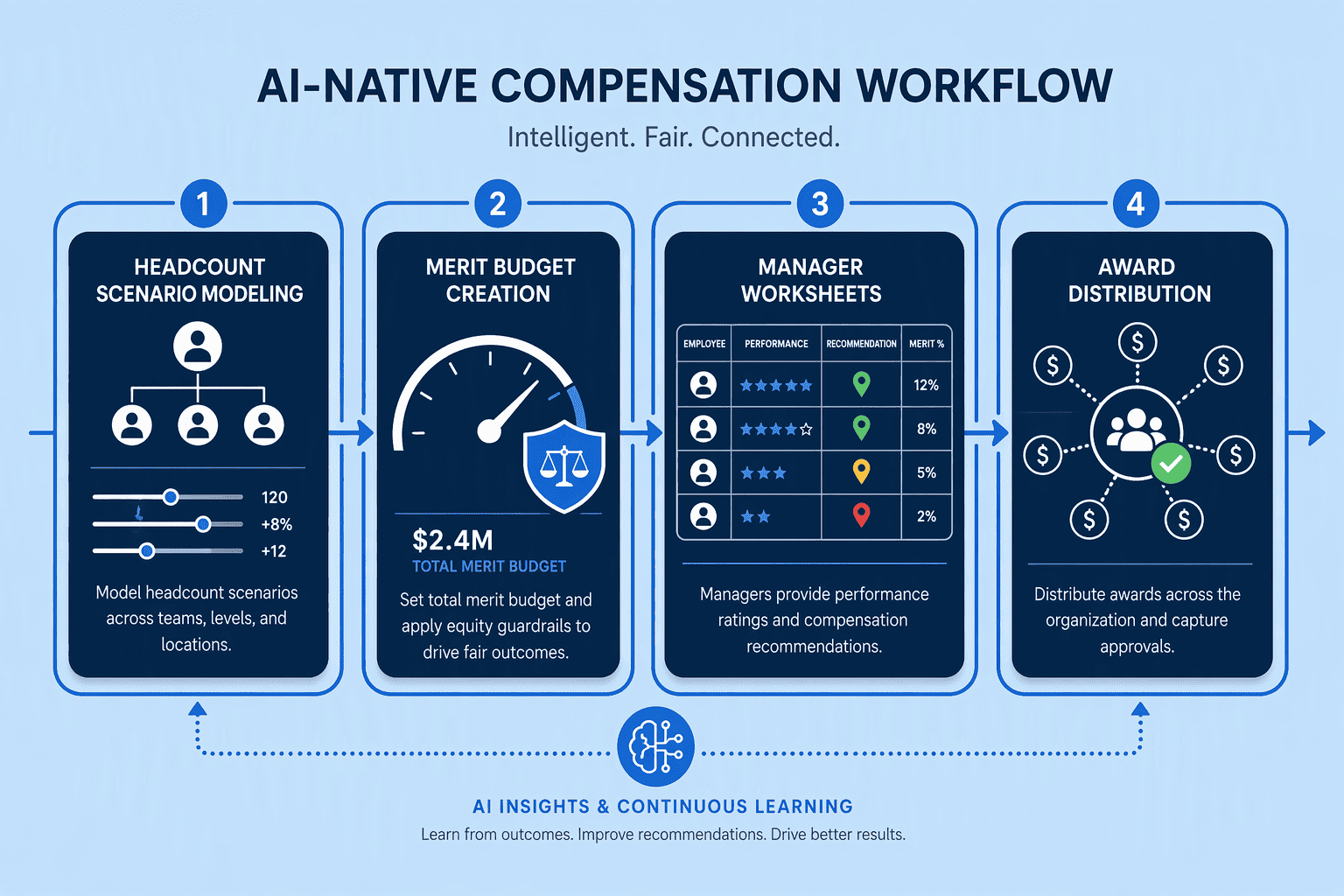
The destination toward which all these platforms are evolving is a cycle where a single AI-native flow handles the entire chain.
Finance begins by modeling headcount scenarios, adjusting for planned attrition and new role demands. The platform then translates these scenarios into a top-down merit budget with pay-equity guardrails automatically applied. No manual translation of a budget number into a separate comp tool. HR distributes manager worksheets where every recommended increase is checked in real time against the published pay range, compa-ratio targets, and equity flags. The system helps managers build plans three times faster by surfacing only the guardrails that matter at each decision point, not by flooding them with information.
The cycle completes when the platform automatically generates a thorough audit report that documents the distribution of awards against budget, pay equity flags resolved, and the adherence to published ranges for every single transaction. This is compliance as the default output of a well-architected workflow, not a separate project tacked on after the fact.
Pay transparency compliance and merit planning are now the same workflow. In 2026, organizations cannot manage them separately. An equity review that happens after managers finalize merit allocations leaves the company exposed on two fronts: internal pay gaps that are harder to correct late in the cycle and disclosure requirements in jurisdictions like the EU, New York, and California that make post hoc fixes visible to regulators and employees alike.
The platforms built for this problem put guardrails, budget models, and range data directly into the manager's decision flow instead of relying on a spreadsheet patchwork. When a manager proposes a 4% increase, the system checks it against the remaining pool, the employee's position in the salary band, and the aggregate distribution by gender and race before the number is ever committed. CandorIQ focuses on exactly that unification, embedding equity checks into the merit workflow rather than treating them as a separate audit step.
For the financial modeling that feeds a transparent merit cycle, CompUp Workforce Planning connects headcount forecasting directly to compensation pools. Enterprise deployments from beqom and HRSoft bring deeper analytics and lifecycle controls to the same problem. The common thread across these tools is real-time equity visibility during the planning window itself, so the final merit grid holds up under the disclosure requirements that are now live in multiple major markets. A good next step is seeing how CompUp puts this into practice.
Pay transparency compliance is the legal and operational requirement to disclose salary ranges and justify pay decisions publicly. In 2026, it's critical because a wave of US state and EU laws now mandates this disclosure, turning the internal compensation structure into a legally defensible public artifact.
A merit cycle that distributes performance-based increases without real-time equity guardrails creates instant legal exposure. The approved pay ranges you publish for transparency must be the active limits applied to every manager's merit recommendation to prevent new pay gaps and ensure consistency.
CandorIQ is purpose-built to combine pay and equity analysis, pay transparency reporting, and merit cycle automation into a single workflow. It specifically unifies payband creation, merit raises, and candidate offer transparency, directly replacing fragmented spreadsheet-driven processes.
Options range from point solutions (CandorIQ), data platforms (Pave, Salary.com CompAnalyst), enterprise pay equity suites (beqom), dedicated lifecycle managers (HRSoft), to HCM powerhouses (Workday). The distinction is whether the tool embeds live equity guardrails into the merit cycle or operates as a separate analytics layer.
Start by connecting upstream workforce budgeting like CompUp Workforce Planning to the pay ranges, then execute the merit cycle inside a system like CandorIQ that applies real-time pay equity checks against those ranges at the moment a manager proposes a raise.
Disconnected tools cause data drift that leads to undetected pay gaps and inconsistent salary ranges across cycles. You lose the ability to produce a defensible audit trail showing that each pay decision was made within approved, equitable bands, which invites regulatory penalties and lawsuits.
Community Manager (Marketing)
As a Community Manager, I’m passionate about fostering collaboration and knowledge sharing among professionals in compensation management and total rewards. I develop engaging content that simplifies complex topics, empowering others to excel and aim to drive collective growth through insight and connection.
Revolutionizing Pay Strategies: Don't Miss Our Latest Blogs on Compensation Benchmarking