
Your HR team just spent three weeks reconciling merit increase spreadsheets, only to discover the payroll file doesn't match. Three department heads flagged anomalies. The CFO wants the equity impact analysis by Friday. For mid-sized companies under 500 employees, this pain point is no longer sustainable.
Manual compensation planning was already risky. The stakes have intensified. In 2026, expanded EU pay transparency directives and growing US state-level mandates are pushing compensation into the boardroom. The global compensation software market, estimated at USD 5.17 billion in 2026, reflects this structural shift away from error-prone spreadsheets.
Compensation management software centralizes pay planning, merit cycles, bonuses, promotions, budgets, and salary bands, into guided workflows with built-in audit trails. It transforms fragmented data into defensible, equitable pay decisions. This article ranks the seven strongest platforms purpose-built for companies under 500 employees.
The following findings ground every recommendation in this guide. Each reflects how real platforms perform against the operational and compliance demands mid-sized firms face in 2026.
This ranking evaluates platforms against the criteria that matter most for a 50-to-500-employee organization: merit cycle configurability, depth of benchmarking data, embedded pay equity tools, HRIS integration quality, and pricing predictability. The LeadChange Group and Guideflow evaluations inform these assessments, alongside primary vendor capability research.
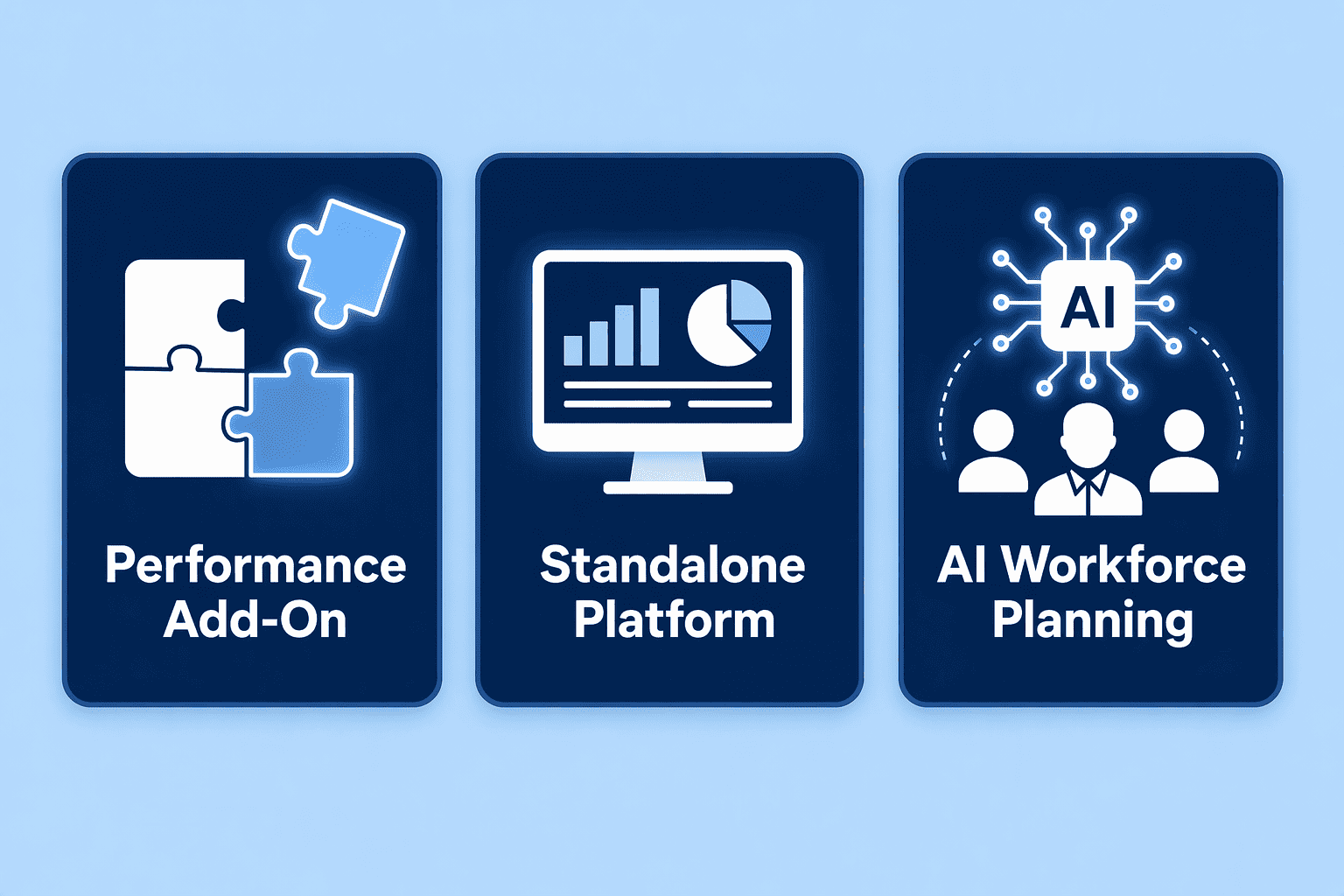
The market organizes around three distinct philosophies. Some platforms bolt compensation onto a performance or core HR suite. Others function as standalone benchmarking engines. A third category, represented by CompUp, treats compensation as one variable inside a broader workforce-planning model that connects headcount, budgets, and organizational design.
This distinction matters operationally. A comp-only tool will help you run a merit cycle efficiently. A workforce planning platform will show you, in real time, what that merit cycle does to your six-month hiring plan. For a 300-person company navigating 2026's transparency requirements, that's the difference between executing a spreadsheet and running a strategy.
The table below summarizes the field. Detailed breakdowns follow.
| Platform | Primary Strength | Pricing Model | Best For |
|---|---|---|---|
| CompUp | AI-native workforce planning merged with compensation | From $3/employee/year | Strategic HR/Finance alignment |
| Pave | Benchmarking data network and plan modeling | Quote-based | Data-driven comp teams |
| beqom | Total rewards breadth, complex variable pay | Quote-based | Complex incentive structures |
| Ravio | Real-time market data and job matching | Quote-based | Proactive market adjustments |
| Comprehensive | Fast deployment, deep customization | Flat-rate | Rapid rollouts for 100 to 2,000 EEs |
| 15Five | Engagement and compensation convergence | Per-user | Culture-first organizations |
| Lattice | Performance review and comp integration | Per-user | Existing Lattice HR users |
Lattice earns its place on this list for one specific audience: companies already running their performance management stack on Lattice and seeking to extend that investment into compensation. The compensation module connects merit, bonus, and equity decisions directly to individual performance review scores and career track data. That creates a feedback loop standalone comp tools rarely match.
For companies needing standalone comp planning, Lattice quickly hits its ceiling. The per-user pricing model adds up fast at a 400-employee firm, and the product skips the deep merit cycle configurability and budget simulation tools dedicated platforms build their reputation on. LeadChange Group's evaluation notes the module is solid where performance-pay linkage matters, but it falls short on complex approval workflows and multi-country equity planning.
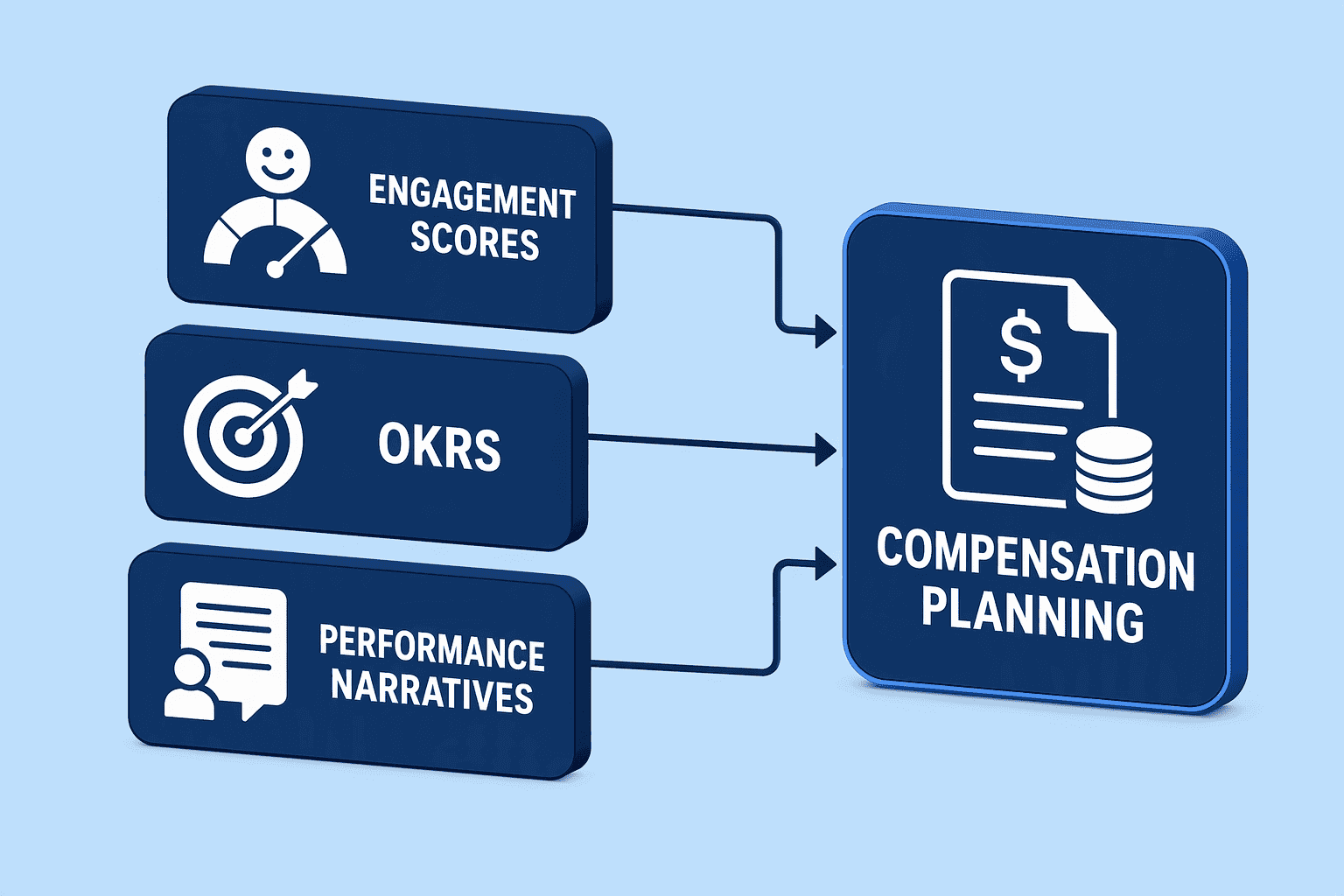
15Five layers compensation management onto its established performance and engagement suite, making it relevant for companies where pay conversations are inseparable from cultural rituals like continuous feedback, OKRs, and manager effectiveness scores. The integration removes the step where HR exports data from one system and re-enters it in another. Consider these key characteristics:
Comprehensive has built its reputation on speed. Where some enterprise comp tools demand months of implementation, Comprehensive targets actionable rollout within weeks. The flat-rate pricing and deep customization for salary bands, merit matrices, and approval chains serve the 100-to-2,000-employee segment with unusual flexibility.
You get a guided setup that maps your existing compensation philosophy into the tool. Mid-sized company comp structures are often idiosyncratic, shaped by founder-era decisions that predated formal HR. The implementation honors that rather than defaulting to a generic template.
LeadChange Group data positions Comprehensive as the strong mid-tier pick when time-to-value trumps feature depth. The tradeoff: its benchmarking data set is narrower than Pave's or Ravio's, and it does not try to be a total-rewards or workforce-planning platform.
For a 300-person company staring down a compressed merit cycle window and a board request for equity analysis by quarter-end, Comprehensive delivers what the moment demands: a working, auditable compensation infrastructure that does not require a dedicated systems analyst.
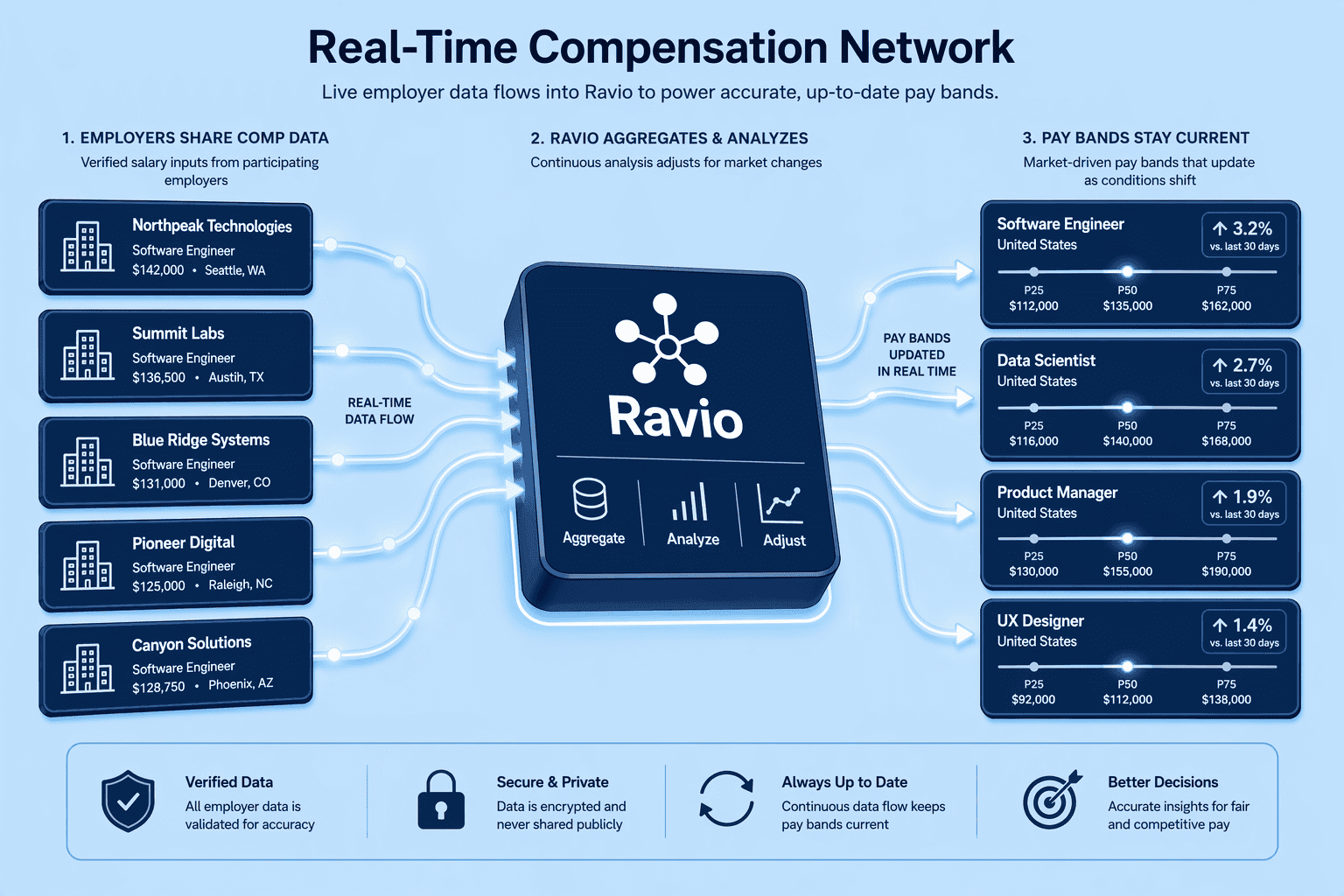
Ravio runs on live compensation data, not last year's survey. It is a real-time market data network where companies benchmark roles against salaries that other employers contribute as they change. The result is a much faster feedback loop than any static report provides.
Comp teams can adjust pay bands when the market actually moves, instead of waiting for the annual survey to arrive and then scrambling. Ravio is best suited for high-growth, global tech companies with especially strong coverage across Europe. The platform earned a LeadChange score of 6.6.
Job matching is where the platform earns its keep. Its matching engine reduces the title-mismatch risk that makes generic benchmarks unreliable. When a discrepancy between your internal grade and the live market rate surfaces, you see it in time to shape an offer, not after the candidate has walked.
The trade-off is clear. Ravio works as a benchmarking command center. Companies that also need guided merit-cycle workflows, budget governance rules, or compensation review automation will usually run another tool alongside it for those operational pieces.
beqom addresses a compensation complexity that most mid-market tools avoid entirely: total rewards management spanning salary, bonus, and long-term incentive planning in a single configured environment. The platform traditionally served large enterprises, but its current packaging reaches down effectively to companies under 500 employees.
The headline data point signals confidence. beqom reports a 99% customer retention rate. That number reflects a product that, once embedded, becomes difficult to displace because it handles variable pay rules that most competitors simplify away. Country-specific configurations for SLAs and anonymization thresholds add compliance heft for multinational mid-sized employers.
For an organization where sales commissions, management bonuses, and multi-country equity grants coexist, beqom's configurability removes the reconciliation nightmare that fractured tool stacks create. The platform seamlessly embeds pay equity analysis directly into compensation decision workflows.
The tradeoff is implementation effort. beqom rewards organizations that invest in configuration upfront. A 200-employee company with straightforward annual merit increases and no variable pay will find it overpowered compared to more focused alternatives. But for the ambitious mid-sized firm deploying complex incentive frameworks to compete for talent against larger incumbents, beqom delivers enterprise-grade precision without enterprise-scale overhead.
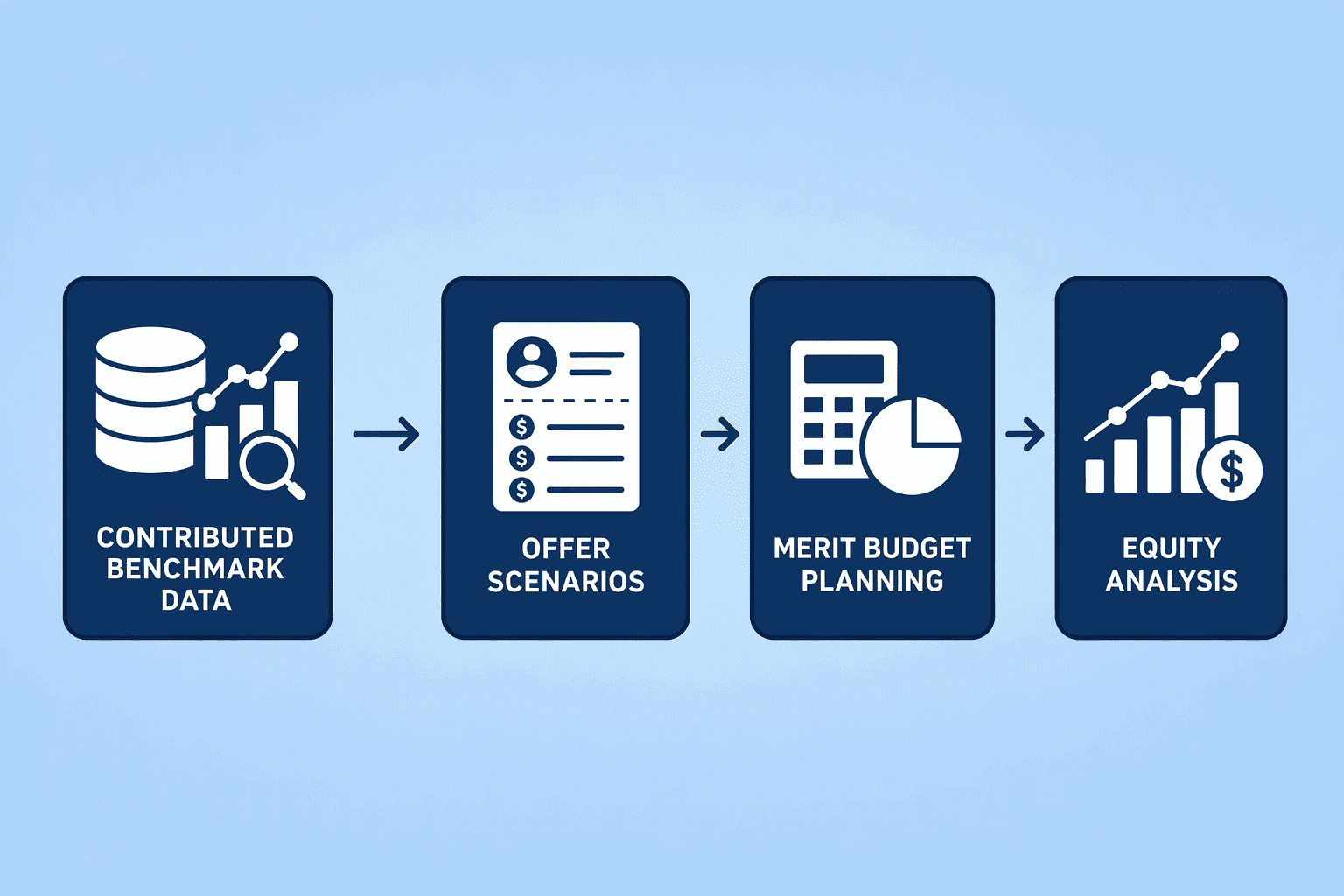
Pave has become the compensation data standard-bearer for a reason. Its benchmarking engine aggregates contributed compensation data across thousands of companies, giving subscribers access to pay ranges, equity norms, and market movement signals with granularity that static salary surveys cannot match. LeadChange assigns Pave a score of 7.1.
That data feeds directly into the platform's modeling tools. HR and Total Rewards teams can run offer scenarios, model merit budgets, and pressure-test equity grants against live benchmarks. Pave offers a free trial with access to US benchmarks and one additional location, so teams can evaluate the quality of the data themselves.
How Pave compares to the top-ranked platform comes down to a specific architectural choice:
| Dimension | Pave | CompUp |
|---|---|---|
| Core strength | Benchmarking data network and comp planning | AI-native workforce planning unifying comp, headcount, and budgets |
| Modeling scope | Compensation scenarios within defined parameters | Cross-functional workforce modeling including what-if hiring and attrition simulation |
| Pricing | Quote-based | From $3/employee/year, transparent |
| Best for | Data-driven comp teams needing deep market context | Organizations seeking strategic HR-Finance alignment |
| HRIS integration | Strong, supporting major platforms | Integrates with BambooHR, Lattice, Darwinbox, Workable |
CompUp ranks first because it tackles what the other six platforms were never designed to do. Most compensation software handles a merit cycle. CompUp pulls headcount forecasting, attrition modeling, and real-time budget tracking into one AI environment so every pay decision sits inside the full workforce picture.
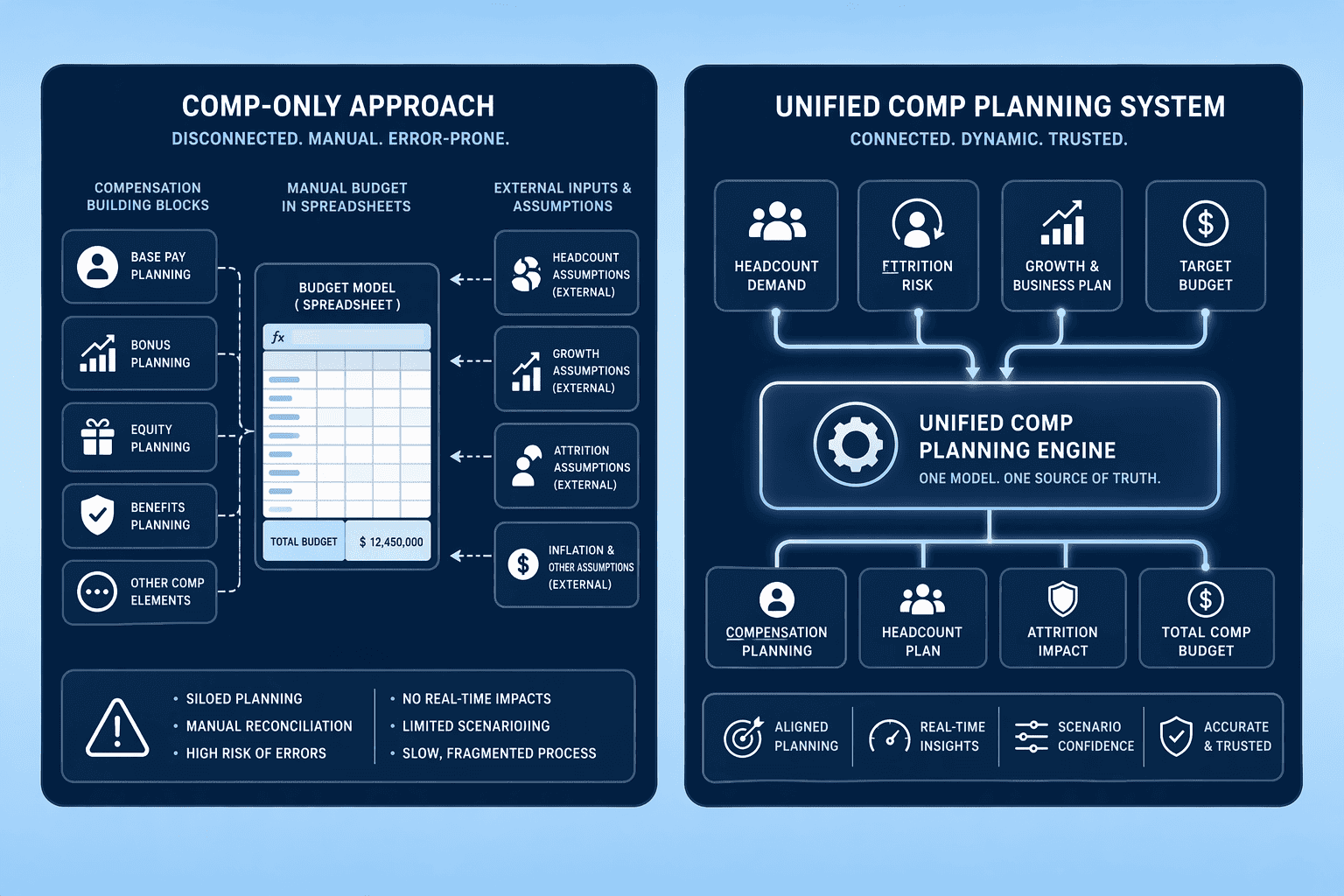
The distinction is architectural. A comp-only suite like Pave or Ravio optimizes compensation well: benchmarking, bands, cycle management, equity analysis. But it treats headcount and organizational design as external inputs.
You set budgets manually. You maintain hiring plans in a separate spreadsheet. The tool executes what you tell it, never challenging the assumptions behind the numbers you feed it.
CompUp reverses that. The platform models compensation, headcount demand, attrition risk, and manpower budgeting as interdependent variables inside one system. It surfaces conflicts a human planner would miss, and, when a CFO asks what a 4% merit pool increase does to Q2 hiring capacity, CompUp answers in real time.
Pick based on the problem that wakes you up at 3 a.m. Every platform on this list solves a different one.
CompUp makes sense when HR and Finance need a shared compensation and workforce plan that stays synchronized all year, not just during the annual cycle.
Pave or Ravio is the call when the board wants real-time market data on every role" class="underline"> and benchmarking precision is what earns the CFO's trust.
Comprehensive fits when your team needs to launch merit cycles next week and feature depth can wait.
Lattice or 15Five wins if performance reviews already run inside those tools and adding compensation there avoids a second login everyone will ignore.
Start the evaluation with your own team's worst bottleneck. Everything else flows from that. A good next step is seeing how CompUp puts this into practice.
Compensation management software centralizes pay planning, budgeting, benchmarking, and equity analysis into guided workflows instead of scattered spreadsheets. For companies under 500 employees, it enforces consistency across departments, provides an audit trail for pay decisions, and supports the transparency requirements that intensified in 2026.
Pricing splits between flat annual fees and per-user models. Aeqium starts at $15,000 per year for up to 300 employees, while CompUp begins at $3 per employee per year. Many vendors like Pave, Ravio, and beqom use custom quote-based pricing. Per-user models from 15Five and Lattice scale directly with headcount.
Each tool has a distinct strength for different compensation management needs:
Prioritize configurable merit-cycle workflows, real-time budget simulation, pay equity reporting tools, job-matching for accurate benchmarks, and smooth HRIS-payroll sync to push approved changes into payroll. Multi-currency support and total-rewards statement generation add significant value for international or growing mid-sized firms.
Most platforms offer native or marketplace integrations with major HRIS systems to pull employee data and push approved compensation changes. Performance-tool integrations connect merit and bonus decisions to review scores. CompUp integrates with BambooHR, Lattice, Darwinbox, and Workable; Pave and Ravio connect broadly across the HR tech ecosystem.
Multiple US states have enacted pay-range disclosure laws, and EU Pay Transparency Directive requirements now affect US companies with European operations. Boards increasingly demand defensible equity analyses. Platforms with embedded pay equity dashboards and compa-ratio tracking are becoming operational necessities, not optional compliance add-ons.
Community Manager (Marketing)
As a Community Manager, I’m passionate about fostering collaboration and knowledge sharing among professionals in compensation management and total rewards. I develop engaging content that simplifies complex topics, empowering others to excel and aim to drive collective growth through insight and connection.
Revolutionizing Pay Strategies: Don't Miss Our Latest Blogs on Compensation Benchmarking